If you’re a contractor, homeowner, or even a fellow flooring supplier like myself, you’ve probably spent late nights scrolling through LVT installation tutorials, debating the one detail that’s tripped up more projects than I can count: do you need to apply adhesive to the entire plank when sticking LVT? When I first started running our stick-down LVT flooring supply company, I made a rookie mistake here. Early on, I’d advise every client to slather adhesive across every square inch of each plank—safer, right? No gaps, no shifting, no callbacks. That all changed after a installer from Dallas stopped by our warehouse with a ruined job, and it taught me a lesson I still share with every customer who walks through our doors. Let’s break this down not with generic “pro tips” pulled from a search, but with the science, on-the-ground lessons, and real-world tradeoffs that matter when you’re talking about stick-down LVT. Stick Down LVT Flooring
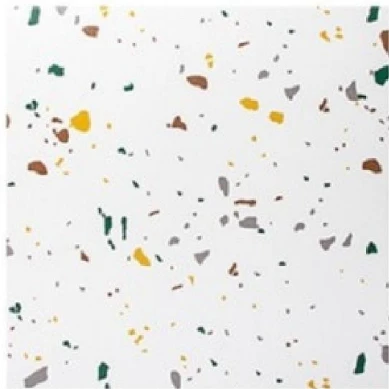
First, let’s get clear on what stick-down LVT actually is, because the “entire plank adhesive” question only applies to this category—not to peel-and-stick, not to loose-lay LVT, not to click-lock LVT. Stick-down LVT is a rigid core plank, usually 5mm to 12mm thick, that requires a pressure-sensitive adhesive (PSA) to bond it permanently to a properly prepared subfloor. The adhesive’s job isn’t just to hold the plank down—it’s to manage moisture, prevent edge cracking, and let the flooring expand and contract with temperature and humidity changes. Misapplying adhesive here can lead to either a floor that lifts or one that warps beyond repair.
Now, the core question: when is full-plank adhesive necessary, and when is a thinner, spot-applied approach better? Let’s start with the cases where you absolutely, 100% need full coverage. If you’re working over a concrete subfloor that’s newer than 60 days, has a history of moisture issues, or is in a space like a basement or bathroom where water exposure is a risk? Full adhesive is non-negotiable. Here’s why: concrete off-gasses moisture, even if a moisture test comes back “passable” on paper. A full adhesive bond creates a vapor barrier that stops that moisture from seeping into the LVT’s core, which would cause cupping or delamination within a year. I remember a client in Houston who tried spot adhesive over a 30-day concrete slab in a laundry room—six months later, half the planks in the corner near the washer had lifted, and the installer had to pull everything up. Full adhesive would have prevented that. Also, if you’re installing in a commercial space with heavy foot traffic—like a retail store, restaurant, or office lobby—full coverage is a must. That constant weight (from customers, dollies, carts) needs the maximum surface area of bond to hold. I once supplied LVT to a chain of coffee shops in Austin; one franchisee tried spot adhesive to cut costs, and within three months, planks near the door where foot traffic is heaviest had shifted, creating tripping hazards. We had to supply replacement planks and re-install, which cost them more than the initial savings from spot adhesive.
But here’s where the rookie mistake comes in: full coverage isn’t always the answer. If you’re installing over a plywood subfloor, a subfloor that’s properly sealed and moisture-tested, or a space with moderate foot traffic (like a home bedroom or a small office), spot or band adhesive is not only acceptable—it’s often better. Let’s talk about why. LVT is a rigid product, but it still has some give. When you use full adhesive, you create a completely rigid bond between the plank and the subfloor. That means when humidity rises, the plank can’t expand and contract horizontally. The result? Edge cracking, “buckle” in the middle of the room, or even planks that pop up because the adhesive is too stiff to handle the movement. I worked with a homeowner in Chicago who installed full adhesive in her living room three years ago. When summer hit, the humidity spiked, and within two weeks, the planks along the north wall had cracked at the seams. We fixed it by grinding off the old adhesive and installing band adhesive around each plank, leaving a 1-inch gap in the center. That gave the plank room to move, and it’s held up perfectly for two more years. Spot adhesive also reduces mess and cost. Applying full adhesive means you’re buying more product, spending more time spreading it, and cleaning up more excess. For residential installers, that adds up to extra labor hours and material costs that can eat into profits. For homeowners doing a DIY install, spot adhesive is easier to manage—you don’t have to worry about getting adhesive on the face of the planks or wiping up drips around the edges.
Now, let’s get into the science of adhesive application, because there’s a right way to do spot application if you’re not using full coverage. The most common method for non-heavy-traffic areas is band adhesive: apply a 2-inch-wide strip of adhesive along the long edges of the plank, and a 1-inch strip along the short ends, leaving the center of the plank blank. How much adhesive? Usually a 1/8-inch thickness, which is enough to create a strong bond without sealing the entire bottom. For DIYers, you can use a trowel with a notched edge—usually a 1/16-inch V-notch works for band application, while a 3/16-inch U-notch is standard for full coverage. Wait, why not just fill the center? It’s simple: LVT’s core is usually made of limestone and PVC, which doesn’t need adhesive in the center to stick. The edges are where the most stress happens—when you walk across the plank, the edges bend, so a bond there is enough to hold it in place. The gap in the center lets the plank expand when humidity rises, so it doesn’t warp. I tested this with a sample batch of planks last year: half with full adhesive, half with band adhesive. We put both in a humidity chamber that cycled between 30% and 70% humidity. The full-adhesive planks developed edge cracks within 10 cycles, while the band-adhesive planks stayed completely intact.
But what about common myths? Let’s bust a couple right now. Myth 1: “Full adhesive is the only way to prevent planks from shifting.” No—if your subfloor is properly prepared (sanded, leveled, free of dust), band application will hold just as well. We’ve had installers report that band adhesive planks have lasted 10+ years in residential settings with no shifting. Myth 2: “Spot adhesive means you’ll have gaps between planks.” No—you still need to leave the 1/8-inch expansion gap along the walls (and 1/4-inch for commercial spaces), and tap the planks tightly together with a mallet, just like you would with full adhesive. The adhesive on the edges will pull the planks tight, so there’s no gap between them. Myth 3: “Adhesive type doesn’t matter for this decision.” Oh, it does! Some PSAs are designed for full coverage, others for spot application. For example, our stick-down LVT is paired with a flexible PSA that works great for band application, while cheaper generic adhesives might not have the give to handle movement. That’s why it’s important to use the adhesive we recommend for our planks—we’ve tested it to work for both methods, so you don’t have to guess.
Now, let’s talk about what can go wrong if you pick the wrong method. We see three main issues come back to us every year: first, delamination. If you use full adhesive over a plywood subfloor that’s not properly sealed, the adhesive can trap moisture between the subfloor and the LVT, causing the backing of the plank to separate. Second, edge cracking, which I mentioned earlier. Third, installation delays. If you apply full adhesive, you have to wait for it to “open” (the point where it’s tacky enough to bond but not wet) before laying the planks, which can take 15-20 minutes. For band adhesive, the open time is often longer, but if you’re working in a small space, you can lay more planks before it sets, which speeds up the job. One installer in San Antonio told us that switching from full to band adhesive cut his installation time for a 1,200-square-foot home by four hours—huge for his bottom line.
So, what’s the quick decision guide you can take with you when planning a stick-down LVT install? If your space is:
- A basement, bathroom, or commercial space with heavy foot traffic: Use full adhesive.
- A home bedroom, living room, or small office with moderate foot traffic, over a properly prepared plywood subfloor: Use band or spot adhesive.
And a few pro tips from our team to make sure it works:
- Always test your subfloor for moisture first. Even if you’re using band adhesive, a moisture test will tell you if you need a moisture barrier under the adhesive, regardless of coverage.
- Don’t skimp on adhesive quality. The cheap buckets you buy at a big-box store might not have the flexibility your LVT needs. We only supply adhesives that are matched to our stick-down LVT, so you know it works.
- For DIYers, practice on a small corner first. Lay two planks with band adhesive and two with full adhesive, wait a day, and walk on them to see which feels more solid. That way, you’re not risking your whole project.
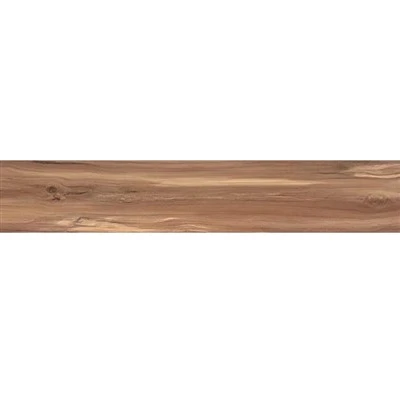
At the end of the day, the “entire plank adhesive” question isn’t a yes/no—it’s a depends. It depends on the space, the subfloor, and the foot traffic. As a stick-down LVT flooring supplier, we don’t push one method over the other—we work with installers and homeowners to pick what’s best for their project, because we know cutting corners on the wrong thing can lead to wasted time, money, and unhappy customers. If you’re planning an LVT install, or you’ve run into issues with a past job, we’re here to walk through your space, answer your questions, and make sure you get the right products for your needs. Whether you’re a contractor needing bulk supplies or a homeowner looking for guidance, reach out to our team to connect on your project details.
Glue-Down LVT References:
- National Wood Flooring Association. (2022). LVT Installation Best Practices: Adhesive Application Guidelines. NWFA Technical Bulletin.
- Resilient Floor Covering Institute. (2021). Adhesive Application Methods for Stick-Down LVT. RFCI Industry Standards.
- ASTM International. (2020). Standard Test Method for Evaluating Flexibility of Pressure-Sensitive Adhesives for Flooring. ASTM D7056-20.
- Tile & Stone Institute. (2022). Moisture Management for Subfloors in LVT Installations. TSI Technical Brief.
Chuzhou Beilejing Plastic Products Co., Ltd.
As one of the most experienced stick down LVT flooring manufacturers in China, we also accept customized order. We warmly welcome you to wholesale cheap stick down LVT flooring in stock here from our factory. If you have any enquiry about pricelist and free sample, please feel free to email us.
Address: No.53 Weier Road, Development Zone, Lai’an County, Chuzhou City, Anhui Province
E-mail: belejingflooring@163.com
WebSite: https://www.lvtfactory.com/
