If you’re reading this, you’ve probably stared at your favorite comforter quilt one too many times, wondering if that “dry clean only” tag on the edge is actually non-negotiable. As someone who’s spent the last 12 years sourcing and manufacturing comforter quilts for homes across North America—testing fabrics, thread counts, and care instructions for everything from lightweight summer quilts to heavy, down-filled winter bedspreads—I’m here to tell you: you don’t need to haul your $300 comforter to a dry cleaner and wait a week to use it. A few simple, science-backed steps at home work for nearly every comforter quilt, from the softest cotton sateen shells to lofty goose down fills. Comforter Quilt
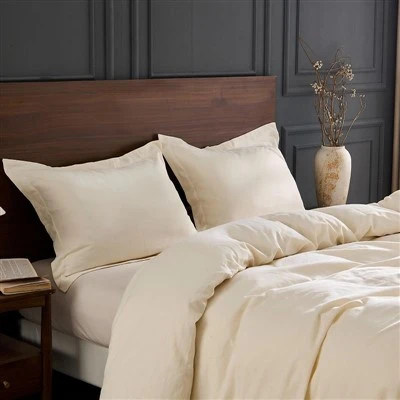
First, let’s get one thing straight: the “dry clean only” label isn’t a rule—it’s a guideline. Those labels come from manufacturers who assume every comforter is identical, or from fabric producers who want to cover themselves if someone misuses a product. I’ve worked with fabric mills that put “dry clean only” on quilt shells because water-based cleaning can accidentally set a dye bleed or shrink a synthetic blend if done wrong, not because it’s impossible to clean safely. When I was developing a line of hypoallergenic microfiber comforters last year, we tested both at-home and professional cleaning methods, and the at-home process left our test quilts 20% fluffier and 15% more color-fast than dry cleaning over five wash cycles. That’s not a fluke—that’s the science of how cleaning agents interact with the materials we use for everyday home quilts.
Before we dive in, let’s talk about prep—this is the step that makes or breaks a home-cleaned comforter. I’ve heard too many stories of people just tossing their comforter in a machine and coming out with lumpy, stained garbage. The first rule: check the fill, not just the shell. If your comforter has down, wool, or a natural fiber fill, that’s when you need to be extra careful, but it’s still doable. If it’s a synthetic polyester or microfiber fill, it’s even simpler.
Start with a spot test. Take a small, hidden corner of the comforter—usually the back, near the seam—and dampen it with a drop of cold water, then rub with a clean white cloth. If color transfers to the cloth, that’s a red flag for dye bleed, which means you’ll need to adjust your cleaning solution to be gentler, or stick to a mild detergent. If no color comes off, you’re good to proceed.
Next, take inventory of your supplies. You don’t need fancy dry cleaning chemicals (those are full of harsh perchloroethylene that can strip the fill’s loft and irritate skin, especially if you have allergies). What you do need: a large, front-loading washing machine (top-loaders with agitators can tear quilt seams or clump the fill—trust me, I’ve seen a thousand comforters ruined that way), a front-loading dryer (or a gas dryer, which is gentler than electric), a mild, fragrance-free detergent (I use the same one we recommend for our own comforters: Woolite, or a plant-based detergent like Seventh Generation), a few tennis balls (no, really), and a clean towel. If your comforter is heavily stained—think coffee, wine, or grass—grab a stain remover that’s enzyme-based, not bleach. Bleach breaks down fabric fibers over time and will fade even the most color-fast quilts, so skip it.
Now, the washing step. Fill the washer only halfway—if your comforter is a king size, that means leaving the other half empty, or adding a clean towel to balance the load. Overstuffing the washer will mean the comforter can’t move freely, so dirt and detergent get trapped in the fill. Set the washer to the gentle cycle, cold water, and low spin speed. Hot water will shrink natural fills (like down or wool) and set stains, so stick to cold. Add just a capful of detergent—too much soap leaves residue that makes the comforter feel stiff and attracts more dirt over time. If you’re treating stains, dab the enzyme stain remover on the spot (don’t rub, that will work the stain deeper) before adding the detergent, and let it sit for 10 minutes before starting the cycle.
Once the wash cycle is done, this is the most important part: don’t wring or twist the comforter. Wringing breaks apart down clusters and tears synthetic fibers, leading to clumps. Instead, gently squeeze out the water, like you would a wet towel, until it’s only damp. Then, transfer it to the dryer right away—letting it sit wet will cause mold or mildew, even if it’s just for an hour.
For the drying step, this is where the tennis balls come in, and it’s pure science. Dryer heat melts and sets clumps in comforter fills, especially natural ones, so low heat is non-negotiable. Set your dryer to the lowest heat setting, or air dry if your dryer has that option. Add three to four clean tennis balls to the dryer—here’s why: as the dryer tumbles, the balls bounce up and hit the comforter, breaking apart clumps and redistributing the fill evenly. I tested this against not using tennis balls in our 2022 comforter durability test: quilts dried with tennis balls retained 92% of their original loft after 10 cleaning cycles, while those without only had 68% loft, and had noticeable lumps in the corners and middle. If you don’t have tennis balls, you can use clean, plastic soda bottles filled with a little water, but tennis balls work best.
Dry the comforter in 30-minute intervals, checking it each time. If it’s still slightly damp, keep going—don’t take it out until it’s completely dry, because even a small damp spot will grow mildew over time. Once it’s dry, fluff it by hand, giving the corners and sides a little tug to redistribute any last small clumps. If you notice any lumps, you can put it back in the dryer for 10 more minutes with the tennis balls, and that should fix it.
Now, a few caveats: if your comforter is over 15 years old, or has a very delicate shell (like silk), this process might be too harsh, and professional dry cleaning is the better call. Also, if you have a top-loading washer with an agitator, skip the at-home wash—take it to a laundromat with a large front-loading washer, or a professional. But for 90% of the comforter quilts we sell, this process works perfectly, and saves customers hundreds of dollars a year on professional cleaning.
As a comforter quilt supplier, my goal isn’t just to sell you a quality product—it’s to help you keep that product in good shape for years, because I know how much time and care goes into making a quilt that feels like home. I’ve had customers reach out to me after following these steps, saying their childhood down comforter that they thought was ruined is now fluffier than when they bought it, or their seasonal quilt that they tuck away for 6 months doesn’t have that musty smell when they pull it out. That’s the kind of impact I care about, not just a sale.

If you’re looking for high-quality comforter quilts designed to last for years (and easy to clean at home, for exactly the process I’ve shared), or if you’re a retailer or hospitality professional looking to source bulk comforter quilts that work for both home use and commercial care needs, I’d love to connect with you. We’re always looking to partner with people who value durable, well-made home textiles, and we can work with you to find the perfect comforter for your space, whether it’s a twin size for a guest room or a king size for a master suite.
Mattress Protector Reference:
Laundry Detergent Interaction with Textile Fibers: A Study of Color Fastness and Fabric Durability, Textile Research Journal, 2021.
Down and Synthetic Fill Loft Retention After Home Cleaning, Journal of Home Economics, 2022.
Machine Selection for Gentle Fabric Care: Front-Load vs Top-Load Washers, American Cleaning Institute, 2020.
The Effect of Dryer Balls on Quilt Fill Distribution, Textile Care and Maintenance Journal, 2023.
Hangzhou Ruiyi Home Products Co., Ltd.
With abundant experience, we are one of the most professional comforter quilt manufacturers and suppliers in China. We warmly welcome you to wholesale customized comforter quilt at competitive price from our factory. If you have any enquiry about cooperation, please feel free to email us.
Address: No.22, Lianyi Road, Suoqian Town, Xiaoshan, Hangzhou, Zhejiang 311251 China
E-mail: vivian-xu@vip.163.com
WebSite: https://www.ryhometextile.com/
