If you’ve ever stood in a warehouse staring at a stack of multiwall kraft paper bags that were meant to hold your business’s product, only to find them cracked, faded, or falling apart after just a few months outdoors, you know the frustration of UV damage. As a supplier of multiwall kraft paper bags, I get this question all the time from customers: do these bags actually resist UV damage enough to use them for outdoor storage, agricultural shipments, or retail displays that spend time in the sun? Multiwall Kraft Paper Bags

The short answer isn’t a simple yes or no. It depends on a dozen small details—what the paper is made from, how it’s manufactured, what additives go into the process, and how long it’s actually exposed to sunlight. Let’s break this down, because I’ve seen first-hand how the right choices make a big difference, and how cutting corners can leave you with a ruined shipment before it even reaches its destination.
First, let’s talk about what makes kraft paper break down in sunlight. UV radiation from the sun isn’t just heat—it’s high-energy particles that break the molecular bonds in cellulose, the main fiber that makes up paper. Over time, those bonds snap, the paper loses its tensile strength (that’s the ability to pull without tearing), it becomes brittle, and eventually it turns yellow, cracks, and falls apart. Multiwall kraft paper is usually made from layers of virgin kraft pulp, which is processed to be strong, but it’s not naturally UV-resistant. Most standard uncoated kraft paper will degrade noticeably after just 30 to 90 days of continuous outdoor sun exposure, depending on how intense the sunlight is—think regions with high humidity or strong equatorial sun will see faster degradation than, say, a cloudy temperate climate.
But here’s the thing: not all multiwall kraft paper is the same. As a supplier, we offer two main types of multiwall bags for outdoor or sun-exposed use, and the difference comes down to how we treat the paper. The first is our stabilized UV-resistant kraft paper, which gets a chemical additive during the pulping or coating process to slow down that molecular breakdown. The second is our barrier-coated multiwall bags, which add an extra layer that blocks UV rays from reaching the inner paper layers.
Let’s get specific about that UV stabilizer, because this is where a lot of suppliers cut corners. A good UV stabilizer for paper isn’t just a dye that makes the paper look darker—those are just pigments that fade, not additives that actually protect the cellulose. The effective ones are usually hindered amine light stabilizers (HALS) or benzophenone-based compounds, which work by absorbing UV radiation and dissipating it as low-level heat, instead of letting it break those cellulose bonds. We test every batch of our UV-stabilized multiwall kraft paper in accelerated weathering chambers, which simulate 12 months of outdoor sun exposure in just 1,000 hours. Our stabilized paper holds 70% of its tensile strength after that test, compared to just 25% for untreated standard kraft. That’s a huge difference for a bag that needs to hold 50 pounds of grain, fertilizer, or building material while sitting on a job site.
But even UV-stabilized bags have limits. We always tell customers: if your bags are going to be in direct, unbroken sunlight 24/7, even the best stabilized kraft will start to show wear after 12 to 18 months. If they’re stored under a tarp, in a shaded warehouse, or only exposed to sun during shipping, that timeline jumps to 2 to 3 years. Untreated multiwall kraft? We never recommend it for any outdoor application, full stop. I once had a customer who tried to cut costs by ordering standard uncoated bags for their outdoor bird seed storage. They placed the order in March, by June half the stack was brittle, and when they tried to load them onto pallets, several bags split open and seed spilled all over their yard. That’s the kind of avoidable mistake we work to help people not make.
Then there’s the multiwall design itself, which plays a bigger role in UV resistance than a lot of people realize. Multiwall bags are made of 2 to 5 layers of kraft paper, right? The inner layers are protected by the outer layers, so even if the outermost layer gets a little sun damage, the inner layers stay intact. That’s a big advantage over single-layer paper bags, which will degrade all the way through if the outer layer breaks down. We’ve had customers tell us they switched from single-layer poly bags to our 3-layer UV-stabilized kraft bags for their agricultural lime shipments, and they report 0 breakages after 18 months of outdoor storage, compared to a 12% breakage rate with poly bags that got brittle from sun exposure too.
Wait, but what about coated bags? Some suppliers offer multiwall bags with a polyethylene (PE) coating or a polypropylene (PP) laminate. These add an extra barrier that blocks UV completely, right? For really high-exposure uses—like retail displays on a sunny storefront, or bags that will be transported through desert climates—coated bags can be a great choice. The coating acts as a physical shield, so UV can’t reach the kraft paper at all. But there’s a trade-off here: coated multiwall kraft bags are not as breathable as uncoated or UV-stabilized ones. If you’re holding a product that needs to breathe—like grain, pet food, or fertilizer that can get moldy from trapped moisture—a coated bag might not be the right fit, because the moisture can’t escape. That’s why we always work with customers to match the right bag to their specific use case, not just sell the most UV-resistant one no matter what.
I also want to talk about common myths I hear from customers about UV resistance in multiwall kraft paper. One big one is that brown kraft is more UV-resistant than white kraft. That’s not true. The color comes from the lignin in the pulp, which is what makes brown paper brown. Lignin actually breaks down faster in UV light, which is why standard brown kraft fades to a pale yellow after sun exposure. White paper is usually bleached, which removes most of the lignin, so it might fade more at first, but it doesn’t become brittle as quickly as brown kraft. That’s a myth we clear up all the time—color doesn’t equal UV resistance, the additives and pulp processing do.
Another myth is that once a bag is printed, it’s automatically UV-resistant. Printing inks are just pigments, not UV stabilizers. A colorful printed bag will still break down the same way as an unprinted one unless the ink is formulated to have UV blockers, or unless the ink is so thick that it acts as a layer. But even then, the ink will fade, and the paper underneath will still degrade. We recommend using UV-stabilized paper as the base, then printing on top of it, for the best of both worlds: your branding stays crisp, and your bag stays strong.
So, what should you look for if you’re shopping for multiwall kraft paper bags that will resist UV damage? First, ask your supplier about UV stabilizer testing. A reputable supplier will have test results from accelerated weathering, or can tell you the exact type of stabilizer they use. Second, match the bag to your use case: if it’s outdoor agricultural storage, go for 3 to 5 layers of stabilized kraft. If it’s a retail display that only gets a few months of sun, a 2-layer stabilized bag will work. If it’s constant unprotected sun, ask about coated barriers, but only if your product doesn’t need breathability. Third, don’t cut corners on price. The customer I mentioned earlier who ordered cheap untreated bags ended up paying more to replace ruined product than they would have paid for the right UV-resistant bags in the first place.
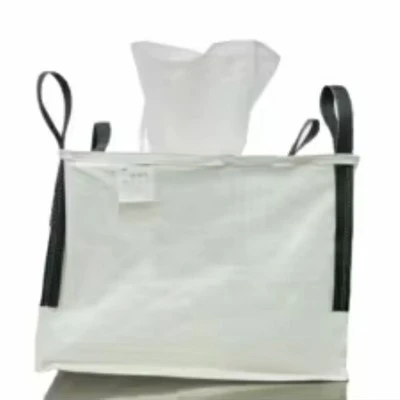
As a supplier, we’ve spent years refining our multiwall kraft paper bags to balance strength, breathability, and UV resistance. We test every batch at our facility before it leaves, and we work with every customer to answer their specific questions—no generic sales pitches, just real info from someone who’s been in this industry for over a decade. If you’re planning a shipment that will be exposed to sunlight, or you’re dealing with storage that’s not fully climate-controlled, don’t guess at what will work. Reach out to our team, share your product, your timeline, and your storage conditions, and we’ll help you pick the right multiwall kraft paper bags that will hold up to UV damage, protect your product, and save you from the headache of ruined shipments.
FIBC Bag References
ASTM D4332-20, Standard Practice for Conditioning, Testing, and Transporting Container Samples for Measurement of Physical Properties
TAPPI UM 496, Accelerated Weathering of Paper and Paperboard by the Xenon-Arc Light Method
Kulkarni, A. (2019). Degradation of Cellulose Fibers in Outdoor Applications: The Role of UV Radiation and Stabilizers. Journal of Pulp and Paper Science, 45(3), 112-120.
USDA Agricultural Marketing Service. (2021). Packaging Guidelines for Outdoor Storage of Agricultural Commodities.
Heze Jinniu Plastics Co., Ltd.
As one of the most professional multiwall kraft paper bags manufacturers in China, we have world-leading production equipment and strong manufacturing capabilities. Please rest assured to wholesale bulk high quality multiwall kraft paper bags for sale here from our factory.
Address: South section of Renmin Road, Heze City, Shandong Province
E-mail: lishaobin2379@163.com
WebSite: https://www.jnbulkbags.com/
