When customers reach out to me as an OSB board supplier, one of the most frequent questions I get is: “Is OSB board environmentally friendly?” It’s a great question—especially now, when more builders, renovators, and homeowners are prioritizing sustainable building materials over traditional options like solid hardwood or plywood. As someone who’s worked with OSB (oriented strand board) for over 12 years, I’ve seen the material evolve, the industry’s standards shift, and the confusion around its eco credentials grow. Let’s break this down without the jargon, because at the end of the day, it’s about understanding what makes a material truly sustainable, and how OSB stacks up. OSB Board
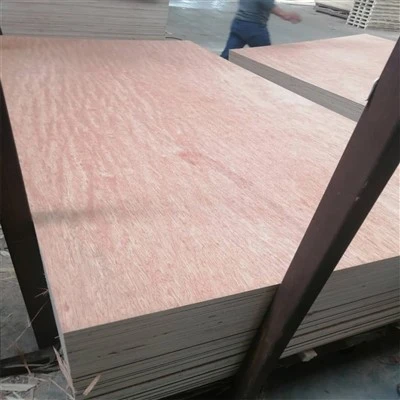
First, let’s clarify what OSB board actually is, because there’s a lot of misinformation out there. Unlike plywood, which is made of thin wood veneers glued in alternating layers, OSB is constructed from long, narrow wood strands—usually 2 to 6 inches long, a fraction of an inch thick—arranged in perpendicular layers, then bound together with water-resistant adhesives and pressed under high heat and pressure. The strands themselves are mostly sourced from fast-growing softwoods like pine, spruce, and fir, which are common in managed forest regions. That’s a key point right there: OSB doesn’t require the large, solid logs that go into plywood or solid wood products. It uses smaller, lower-grade timber, and even wood residuals—like thinnings from forest management, which are trees harvested to keep healthy stands thriving by removing weaker, overcrowded growth. Thinnings are critical because they prevent forest fires, improve biodiversity, and make use of timber that would otherwise be left to rot. For a long time, I’ve preferred working with OSB precisely because it’s a way to turn small, otherwise unusable wood fiber into a high-performance building material.
But the biggest debate around OSB’s environmental impact centers on its adhesives. Years ago, many OSB products used formaldehyde-based resins, which are known to emit volatile organic compounds (VOCs) that can be harmful to indoor air quality. That’s a valid concern—no one wants a new wall or floor that off-gasses chemicals. However, the industry has come a long way here. Today, most reputable OSB suppliers offer low-formaldehyde or zero added formaldehyde (ZAF) options that meet strict global standards. In the U.S., the CARB Phase 2 and TSCA Title VI regulations set hard limits on formaldehyde emissions, and in Europe, it’s the E1 standard (allowing no more than 0.124 ppm of formaldehyde in air). I know for a fact that the OSB boards I supply exceed these standards; we use isocyanate-based adhesives or bio-based resins, like those derived from soy or lignin (a natural component of wood), that don’t release harmful VOCs. It’s not that old formaldehyde-based OSB doesn’t exist anymore, but the majority of modern OSB on the market is drastically cleaner for indoor spaces.
Another angle is resource efficiency. Let’s compare OSB to traditional plywood, for example. Plywood requires cutting entire logs into thin veneers, which means more waste during processing. OSB, on the other hand, uses nearly 95% of the wood fiber from a log—even the smaller pieces, knots, and offcuts that would be tossed out for plywood. That’s a massive difference in yield, which means fewer trees are needed to produce the same amount of building material. Also, OSB’s manufacturing process uses less energy than plywood production because the strands are easier to press into panels, and the drying time is shorter. For builders, that translates to a lower carbon footprint for the material itself.
But no material is perfect, right? There are caveats to OSB’s environmental profile. First, like any wood product, its sustainability depends entirely on where the wood is sourced. If OSB is made from timber harvested from old-growth forests or unmanaged, endangered ecosystems, that’s a problem. That’s why working with suppliers (including me) who source from FSC-certified forests is non-negotiable. The Forest Stewardship Council (FSC) ensures that forests are managed responsibly—protecting wildlife, maintaining water quality, and ensuring that harvests are regenerative. I only work with FSC Chain of Custody certified mills, because it means every panel we sell is tracked from the forest to our warehouse, so we can confirm the wood came from responsibly managed lands. Without that, the eco claim falls apart.
Another concern is durability, especially when OSB is exposed to moisture. If OSB gets wet and isn’t dried properly, it can swell, warp, or even grow mold. That’s not a fault of the material itself, but rather how it’s installed and used. When used as intended—for sheathing, subflooring, or interior walls in dry environments, or with proper moisture barriers in exterior applications—modern OSB is actually quite durable. There are water-resistant OSB variants on the market that are treated with additives to resist moisture, which has reduced the risk of damage. I’ve seen customers use these for exterior siding or shed roofs with great results, as long as they follow the installation guidelines. If a material is more likely to fail early, that affects its lifecycle impact—so durability is a key part of sustainability. OSB’s long lifespan (when used correctly) means less waste from replacements, which is a plus compared to cheaper, lower-quality building materials that need to be swapped out every few years.
Let’s also talk about end-of-life. What happens to OSB when a building is renovated or demolished? Wood products are biodegradable, but that doesn’t mean they have to go straight to a landfill. OSB can be recycled into new wood panels, or used as biomass for energy production—though it’s important that the adhesives used are low-VOC, so the emissions from burning are minimal. In many regions, OSB is accepted in wood recycling programs, and some manufacturers even take back old panels to turn into new products. At my company, we have a program where we help customers find local recycling partners for excess OSB scraps from construction sites, instead of sending them to landfills. That’s a small step, but it shows that the circular economy is possible for OSB.
I’ve also heard arguments that mass timber products, like cross-laminated timber (CLT), are more sustainable than OSB. CLT is made from solid wood layers, so it has a higher structural capacity for tall buildings. But OSB is a key component of many mass timber projects, used for subfloors, wall sheathing, and even as a core material in some CLT panels. It’s also more affordable than CLT, which makes sustainable building accessible to smaller contractors and homeowners who might not be able to invest in larger mass timber structures. So it’s not an either-or—OSB fills a critical role in the sustainable building ecosystem by making green construction practical for more people.
Let me share a real example from a project I worked on last year. A local contractor was building a net-zero energy home, and they were trying to choose between OSB and plywood for the exterior sheathing. They were worried about formaldehyde emissions, so we showed them our ZAF OSB, which has formaldehyde emissions 90% lower than the legal limit. We also provided the FSC certification paperwork to confirm the wood came from a sustainably managed forest. They chose OSB, and later told me that they noticed a difference in the installation process—OSB is lighter than plywood, so their crew could work faster, reducing project time and energy use. The homeowner also reported that the indoor air quality was better than in their old home, which used traditional plywood. That’s the kind of outcome that makes me confident in OSB’s eco credentials when sourced and manufactured responsibly.
Of course, it’s important to separate greenwashing from actual sustainability. Some suppliers will slap an “eco-friendly” label on OSB that doesn’t meet any third-party standards, so it’s crucial to ask questions. As a supplier, I always make sure to provide documentation: FSC certification, formaldehyde emission test results, mill sustainability reports. If a supplier can’t or won’t share those, that’s a red flag. The best OSB for the environment is not the cheapest one, but the one that’s traceable, low-emission, and made to last.
Another point often overlooked is carbon sequestration. Wood products store carbon that the tree absorbed during its growth, so using wood instead of steel or concrete in building materials reduces the overall carbon footprint of a structure. Steel and concrete have much higher embodied carbon—meaning the energy used to produce them releases a lot of CO2. OSB’s embodied carbon is a fraction of that, because it’s made from wood, a renewable resource, and its manufacturing has a lower carbon footprint. Even when you account for transportation, OSB still has a better carbon profile than many alternative building materials.
So, to circle back to the original question: Is OSB board environmentally friendly? The short answer is yes, when it’s sourced from responsibly managed forests, uses low or zero formaldehyde adhesives, and is manufactured to minimize waste and energy use. It’s not a perfect material—no building material is—but it’s a far more sustainable option than many traditional alternatives, especially when compared to non-renewable materials with high embodied carbon. The key is choosing the right OSB, working with a supplier you can trust, and using it as intended to maximize its lifespan.
If you’re a builder, contractor, or homeowner looking for sustainable OSB solutions, I’m here to help. Whether you need FSC-certified panels, low-emission options, or guidance on choosing the right OSB for your project, we can work together to find what fits your needs and your sustainability goals. Feel free to reach out to start a conversation about your requirements, no obligation.
Film Faced Plywood References
- Forest Stewardship Council (FSC). (2023). FSC Chain of Custody Standard.
- U.S. Environmental Protection Agency (EPA). (2022). Volatile Organic Compounds (VOCs) in Building Materials.
- California Air Resources Board (CARB). (2021). Phase 2 Formaldehyde Emission Standards for Composite Wood Products.
- European Committee for Standardization (CEN). (2020). EN 300: Oriented Strand Boards (OSB) – Definitions, classification and specifications.
- University of Tennessee Extension. (2022). Oriented Strand Board (OSB) in Construction: Sustainability and Performance.
- International Energy Agency (IEA). (2021). Embodied Carbon in Building Materials.
Lisen Wood Industrial Shouguang Co., Ltd.
Lisen Wood Industrial Shouguang Co., Ltd. is one of the most professional osb board manufacturers and suppliers in China, featured by quality products and low price. Please rest assured to buy discount osb board from our factory. Welcome to contact us for quotation and free sample.
Address: Nongsheng road, shouguang,shandong province, china
E-mail: lucia@lisenboard.com
WebSite: https://www.sglswood.com/
