If you’ve ever sourced rubber materials for industrial, medical, or consumer applications, chances are you’ve seen two names pop up repeatedly: nitrile rubber and butyl rubber. As a nitrile rubber supplier who’s worked with manufacturers, lab techs, and product designers for over a decade, I can’t tell you how many times I’ve heard these two materials confused—like they’re just two versions of the same go-to rubber, interchangeable for any job. Let me set the record straight: that’s a mistake. Their molecular structures, performance traits, and ideal use cases are so different that picking the wrong one can turn a product prototype into a costly failure, or even create safety risks. Let’s break this down simply, no jargon-heavy textbook fluff, just the real-world differences I’ve seen play out in the supply chain every day. Nitrile Rubber

First, let’s start with the core of what makes each rubber unique: their chemical makeup. Nitrile rubber (also called NBR, or acrylonitrile butadiene rubber) is a copolymer—meaning it’s made by chemically bonding two different monomers: acrylonitrile and butadiene. The ratio of these two is adjustable, which is why it’s such a versatile material. As someone who runs a supply side, we can tweak the acrylonitrile content from about 18% up to 50% to change how the nitrile performs. Butyl rubber, on the other hand, is a homopolymer: it’s made from just isobutylene, with a small amount of isoprene added to make it easier to cure (cross-link, for the uninitiated) into a solid material. That tiny mix-in of isoprene is key, but it’s not enough to make butyl’s chemical profile anything like nitrile’s.
The biggest difference, for most people, is oil and chemical resistance. That’s where nitrile rubber shines, and it’s why 90% of our nitrile orders go to customers making automotive gaskets, hydraulic hoses, and industrial gloves—parts that will be exposed to gasoline, hydraulic fluid, lubricants, or even common cleaning chemicals. The acrylonitrile monomer has a polar (electron-rich) structure that repels non-polar oils and hydrocarbons. Think of it like a water-resistant jacket: the polar molecules in nitrile create a barrier that oil can’t soak through easily. Crank up the acrylonitrile to 45% or higher, and that barrier gets even tighter; we supply high-acrylonitrile nitrile for aerospace fuel system components that need to hold up to jet fuel for years.
Butyl rubber’s superpower is the opposite: it’s almost too good at repelling, specifically, gases. That low permeability (the ability of a substance to let gases or vapors pass through) is why butyl rubber is the go-to for inner tubes, pharmaceutical stoppers, and air compressors. Its tight molecular chain structure—unbroken by the small isoprene cross-links—means gas molecules like oxygen or CO2 can’t slip through easily. I’ve seen butyl inner tubes stay inflated 2-3 times longer than natural rubber ones, which is a huge win for bicycle and tire manufacturers. But if you ask a mechanic if butyl can handle a grease leak, they’ll laugh—because butyl swells and breaks down almost instantly when exposed to most petroleum-based oils. I once had a customer who tried butyl gaskets for a hydraulic pump and had them fail in three days; they switched to our nitrile blends and haven’t looked back.
Next, flexibility and durability across temperatures, another area where the two split sharply. Nitrile rubber’s butadiene monomer gives it great elasticity at low temperatures—down to around -40°F (-40°C) for our lowest-acrylonitrile blends. That’s why it works for outdoor winter seals, like truck door gaskets in northern climates. But it starts to soften and lose its shape when temperatures climb above 200°F (93°C), and extreme heat can make it brittle over time. For high-heat industrial applications, nitrile isn’t the right pick.
Butyl rubber, meanwhile, holds up better in high heat—its continuous isobutylene chain can handle temperatures up to around 300°F (149°C) for short periods, and it’s more resistant to ozone (the toxic gas that builds up in smog or industrial exhaust) than nitrile. That makes it great for outdoor weatherstripping that needs to resist sun damage, or parts that sit near industrial furnaces. The trade-off? Butyl gets stiff and crack-prone at temperatures below around -20°F (-29°C), so it’s useless for cold-weather outdoor parts. I learned this the hard way a few years back; a customer came to us with a rejected shipment of butyl rubber ice fishing auger seals that were cracking in -10°F weather, and we had to explain that butyl just isn’t made for that kind of cold. We swapped them for low-temperature nitrile, and those seals work fine.
Then there’s use case practicality, which is where suppliers like me earn our keep. Let’s talk about gloves, a huge market for both materials. Medical-grade disposable gloves: nitrile replaced latex for a reason—latex allergies, right? But not all nitrile gloves are the same; our medium-acrylonitrile nitrile is the standard for medical exams because it’s puncture-resistant, repels blood-borne pathogens, and works for short contact with most chemicals. Butyl gloves? They’re not common for medical use because they’re thick, not as flexible, and more expensive. Instead, butyl gloves are for specialty jobs, like handling concentrated acids or volatile chemicals in a lab or chemical plant. If you need a thin, flexible glove for everyday use, nitrile’s your guy; if you need a heavy-duty barrier for corrosive substances, butyl’s worth the extra cost.
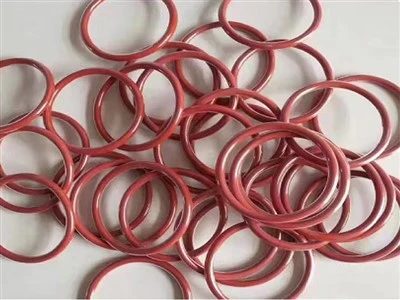
For seals and hoses: nitrile is everywhere here. Automotive brake lines, fuel hoses, hydraulic seals—all nitrile. We also supply nitrile for oil filters and O-rings for heavy machinery. Butyl’s rare here because of its oil weakness, so you won’t see butyl in a car’s engine compartment. But in things like HVAC systems’ duct seals, or the inner liners of propane tanks, butyl is king because it doesn’t let gas seep through. That gas barrier is why butyl is also the material of choice for pharmaceutical vial stoppers—they keep oxygen and moisture out, so vaccines or drugs stay stable longer. Nitrile could do that, but it would cost more and have a shorter barrier life for gases.
Another key point: cost. As a nitrile supplier, I can tell you that nitrile is generally more affordable than butyl for equivalent applications, especially since we can adjust its acrylonitrile ratio to fit different budget needs. Butyl’s production process is more complex because it needs that isoprene additive to cure, plus its tight molecular structure requires more careful manufacturing, so it’s usually 20-30% more expensive than standard nitrile. That’s a big factor for small businesses or startups working on tight budgets; if you don’t need that gas barrier, nitrile is the smarter, cheaper pick.
Wait, let’s address a common misconception: people think all rubber is “rubber,” so if one works, the other will too. I’ve had customers come to me saying, “We used nitrile for our glove, but we need more chemical resistance, so can you just send butyl?” No, that doesn’t work. Butyl’s chemical resistance is almost the opposite of nitrile’s; it breaks down in oils, nitrile breaks down in ozone and high heat. The same goes for hoses: a hydraulic hose made of butyl will collapse after a week of use, because the oil eats through it. I’ve even seen a food manufacturer try to use butyl rubber for a conveyor belt seal; they had to recall 50,000 units after butyl’s isoprene leached a chemical into their food. That’s the kind of mistake that comes from confusing these two materials.
Now, when would you actually choose one over the other? Let’s make a quick, real-world cheat sheet:
- Pick nitrile if you need oil/chemical resistance, moderate temperature flexibility (-40 to 200°F), affordability, or puncture resistance for gloves, hoses, seals, and automotive parts. That’s 90% of the applications I see.
- Pick butyl if you need near-zero gas permeability, high heat resistance (up to 300°F), or ozone resistance, like inner tubes, pharmaceutical stoppers, propane tank liners, or heavy-duty chemical gloves.
At the end of the day, as a nitrile rubber supplier, I’m biased—but that bias comes from seeing what works. I don’t sell butyl, but I never steer a customer wrong if butyl is the better fit. For example, last year a medical device maker came to me asking for a material for a drug vial stopper; I explained that butyl was the standard for that, and even though I don’t carry it, I could point them to a trusted supplier. That’s how business works, right? It’s not about pushing the product I sell; it’s about making sure the customer doesn’t make a costly mistake.
If you’re currently sourcing rubber materials and you’re not sure which one is right for your project—whether it’s a small prototype or a full production run—reach out. I’ve spent years troubleshooting supply chain issues, testing material performance, and adjusting blends to fit specific needs, so I can help you avoid the missteps I’ve seen hundreds of other customers make. Whether you need nitrile for a new gasket, a batch of gloves, or a custom hose, or you’re just clarifying if butyl is a better fit, I’m here to walk through the details and find the right material for your application.
Hydrogenated Nitrile References:
- "Nitrile Rubber (NBR) Properties and Applications," Rubber Chemistry and Technology, 2021.
- "Butyl Rubber: Structure, Properties, and Uses," Journal of Elastomers and Plastics, 2019.
- Industrial Rubber Materials Guide, Society of Plastics Engineers, 2022.
- "Chemical Resistance of Elastomers," Occupational Safety and Health Administration (OSHA) Technical Manual, 2020.
Wuhu Chaori Rubber and Plastic Technology Co., Ltd.
As one of the most professional nitrile rubber manufacturers and suppliers in China, we have world-leading production equipment and strong manufacturing capabilities. Please feel free to wholesale bulk durable nitrile rubber made in China here and get quotation from our factory. For price consultation, contact us.
Address: Qihang Road, Xinwu Economic Development Zone, Wanzhi District, Wuhu City, Anhui Province, P.R. China
E-mail: chaori2026@163.com
WebSite: https://www.chaorirubber.com/
