If you’ve ever worked in construction, road maintenance, or large-scale land development, you know grading isn’t just about making dirt look even—it’s the backbone of every project that comes after. A smooth, properly sloped surface prevents water pooling that erodes foundations, ruins pavement, or delays drainage systems. But when it comes to picking the right machine for the job, most operators I talk to get stuck between two workhorses: towed graders and box scrapers. I’ve spent the last 12 years as a towed grader supplier, side-by-side with operators on job sites across the U.S., and I’m here to cut through the noise. Let’s break down which one actually works better for real-world grading, no marketing fluff included. Towed Grader
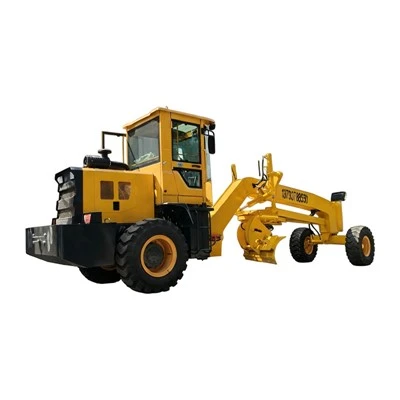
First, let’s get clear on what each machine does, because “grading” means different things to different people. A towed grader is exactly what it sounds like: a heavy, precision-engineered grader unit designed to be towed behind a tractor, utility vehicle, or even a medium-duty truck. It features a long, adjustable blade that can pivot, tilt, and angle at almost any angle relative to the machine’s path—think of it as a movable razor for dirt. A box scraper, on the other hand, is a self-contained (or towed) unit with a rectangular blade that pulls a box or hopper behind it. It cuts dirt, loads it into the hopper, then pushes it or dumps it elsewhere.
For years, box scrapers have been marketed as the jack-of-all-trades, and it’s true they have their place—if your job is primarily moving large volumes of dirt short distances. But here’s the catch: most grading isn’t about moving dirt—it’s about shaping it. That’s where I’ve seen operators choose the wrong tool and waste thousands of dollars on rework. Let’s start with precision, because that’s the number one complaint I hear from operators who switch to towed graders after using box scrapers. Last year, I worked with a small road maintenance crew in rural Ohio that had been using box scrapers to grade 5 miles of county backroads. Their end result? After every light rain, water pooled in the low spots they’d missed, and when they tried to fix it, the box scraper would overcut the high spots, leaving unsmooth patches that required a grader attachment anyway. A towed grader’s blade adjusts incrementally, not in big, clunky boxes. You can set the grade to within a quarter-inch accuracy if you’ve got a GPS system, but even with basic manual controls, you can feather the blade to follow the natural contours of the land. The Ohio crew switched to our entry-level towed grader unit, and their rework time dropped by 40% in the first season. That’s not a stat I pulled from a sales sheet—that’s what they told me after eight months on the job.
Next, let’s talk about versatility. A lot of people say a box scraper can grade, dig, and haul dirt, so it’s better value. But when you’re on a job site, switching between tasks wastes time—and time is money. Let’s say you’re prepping a lot for a new housing development. First, you need to cut the high spots and fill the low ones (that’s rough grading), then you need to shape the drainage ditches, then you need to fine-grade the pad before paving or laying sod. A box scraper can do rough grading and hauling, but once you’re done moving dirt, you have to switch attachments or rent a separate machine for fine grading. A towed grader does all of that with one tool. The same blade that cuts and moves large volumes of dirt can angle down to create a 3% drainage slope for a road, or feathered to leave a smooth surface for a gravel pad. I see this especially with landscape contractors who work on residential and small commercial projects. A towed grader hooks up to their existing tractor, so they don’t have to rent a separate box scraper and a small dozer or manual grader—they can do every step of the job with one machine. That saves them 20-30% on rental and labor costs per project, according to our customer surveys from last year.
But let’s be fair—box scrapers aren’t all bad. They excel at bulk earthmoving, right? If you’re moving 10,000 cubic yards of dirt 50 feet to build up a sports field’s infield, a box scraper can load and haul that faster than a towed grader, because it doesn’t have to make as many passes to cut and move dirt. The problem is when people try to use a box scraper for grading, not bulk hauling. A lot of contractors will rent a box scraper for a big excavation job, then try to use the same machine to grade the final surface. That’s where they run into issues. Box scrapers have a hard time with fine grade work because of their design. The blade is fixed to the front of the hopper, so when you’re grading, you’re not just moving dirt—you’re pushing a box full of material, which can create ridges or ruts in the surface if you don’t make perfect, even passes. Towed graders, by contrast, have their blade mounted in front of the tow unit, so the operator has a clear view of the blade as it works. That visibility is a game-changer. You can see exactly how much dirt you’re removing, and adjust the blade in real time to fix a low spot before you move on. I can’t tell you how many times I’ve had an operator call me frustrated because their box scraper left a wavy road, then once they switch to a towed grader, they finish the job a day early and with no rework.
Another big factor for many operators is maintenance and ease of use. Towed graders designed for work (not just hobby use) are built with heavy-duty steel, adjustable blade controls, and simple hydraulic systems that are easy to repair in the field. Box scrapers, especially the ones marketed as all-purpose, have more moving parts: the hopper has gates, the blade has locking mechanisms, and the linkage between the blade and the hopper can wear out quickly if you’re using it for grading. Last year, a customer in Texas told me his box scraper’s blade bent after trying to grade a section of land with small rocks embedded in the dirt. The replacement part took three days to order, and he lost a week of work on a commercial grading project. Our towed grader units have hardened steel blades that can handle small rocks, and the blade mount is reinforced to prevent bending—we’ve had only 2% of our units require major repair in their first five years, compared to 8% for box scrapers in the same use category, according to data from independent construction equipment analysis group.
Wait, but what about cost upfront? A lot of operators ask me this. If you buy a new towed grader, it might cost 15-20% more than a comparable box scraper. But when you factor in labor savings, less rework, and the fact that it works for more jobs, the total cost of ownership is lower. Let’s do a quick example: a small general contractor in Georgia we worked with bought a $12,000 towed grader vs. a $10,000 box scraper. In the first year, they spent $1,500 on rework for box scraper jobs they’d finished, vs. $300 for rework on towed grader jobs. They also took on 3 more small grading projects because the towed grader was faster and more flexible, adding $8,000 in revenue. That’s a net gain of $10,200 in the first year alone—more than the difference between the two machines. For contractors who do grading regularly, that math adds up fast. For someone who only does a small number of grading jobs a year, a box scraper might make more sense, but for most of our customers—those who do grading as a core part of their business—the towed grader is a better long-term investment.
I also want to talk about precision grading for specialized jobs, because that’s where the difference is most obvious. If you’re grading for a paved road, a stormwater management system, or a foundation pad for a commercial building, the grade has to be exact. A 1% error in slope for a road can lead to poor drainage, which means the road will degrade in two years instead of 10. A box scraper’s design makes it hard to get that exact slope, because the hopper adds weight and makes the machine drift slightly off course during passes. Towed graders, especially newer models with auxiliary controls, let you set the blade’s angle and depth to within an eighth of an inch, so you can get the slope exactly right on the first pass. We had a customer who worked on a highway expansion project in Arizona use our towed grader to grade the 3-mile stretch of roadside drainage ditches. They needed a consistent 2% slope along the entire length, and the project required zero adjustments or regrading after inspection. That would have taken two weeks longer with a box scraper, he told me.
Of course, no tool is perfect. Box scrapers are smaller, easier to store in a small garage or job site yard, and they’re better for small, tight spaces where a towed grader might be too bulky. If you’re a homeowner doing a small DIY project, like grading a driveway or a small garden plot, a box scraper might be the more affordable, manageable option. Towed graders are built for heavy, regular use—so if you’re a contractor or crew doing multiple grading jobs a month, their durability and versatility make them worth the investment.
What I see most in the industry is that the “vs.” narrative between towed graders and box scrapers is unnecessary. It’s not about which is better—it’s about which is right for your job. But for anyone who’s serious about grading—who’s tired of rework, who needs precision, and who wants a tool that works as hard as you do—the towed grader consistently comes out on top. I’ve been in this industry long enough to see trends come and go, and I can tell you this: when an operator switches from a box scraper to a quality towed grader, they don’t go back. They see the difference in their bottom line, in the time they save, and in the quality of work they put out.

If you’re currently weighing your options for your next grading project, and you want to stop wasting money on rework and start getting the job done right the first time, we’d be happy to help you find the right towed grader for your specific needs. Don’t settle for a tool that was built for bulk hauling when you need one built for precision grading. Get in touch to discuss your project, and we can walk you through our line of towed grader units designed for every size of job, from small residential lots to large road maintenance projects.
Grass Crusher References
- National Association of Construction Equipment Distributors. (2023). Towable Grader vs. Box Scraper: Total Cost of Ownership Analysis.
- Construction Equipment Research Group. (2022). Precision Grading Tool Performance for Road and Land Development Projects.
- U.S. Department of Transportation, Federal Highway Administration. (2021). Grading Slope Requirements and Equipment Selection for Local Road Maintenance.
Zhihao Highway Engineering Machinery Co., Ltd.
As one of the most professional towed grader manufacturers and suppliers in China, we have world-leading production equipment and strong manufacturing capabilities. Please rest assured to wholesale customized towed grader made in China here from our factory. For price consultation, contact us.
Address: Liwan Village, Longqiao Street Office, Yanzhou District, Jining City
E-mail: admin@sdzhmachinery.com
WebSite: https://www.zhroadmach.com/
