If you’ve ever stood in a grocery store’s rice aisle, scanning bags labeled “high protein” or “fortified,” you might’ve wondered: can a machine designed to make artificial rice actually craft a grain that stacks up nutritionally? As a supplier of artificial rice making machines, I spend most of my days talking to food manufacturers, cereal companies, and even small-batch food startups who have exactly that question—often paired with a second one: and will it be profitable? Artificial Rice Making Machine
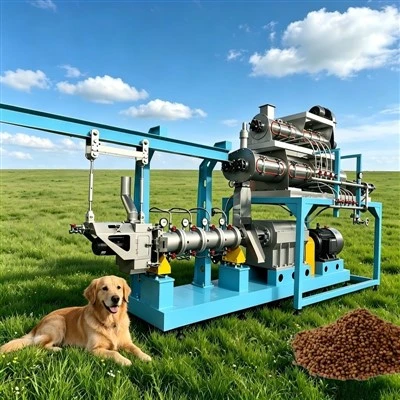
Let me start with what I know firsthand: artificial rice isn’t the “fake food” some people assume it is. It’s an extruded, pelletized grain made from a mix of base ingredients—usually rice flour, cornmeal, or a binder like modified starch—plus supplemental nutrients, and a machine that forms it into grains that look, cook, and taste like natural rice. For years, these machines were used to stretch staple grains, reduce food costs, and even fight malnutrition in low-income regions. But the shift toward high-protein diets has made manufacturers rethink what these machines can do.
First, let’s break down how an artificial rice making machine works, because that process is the foundation of whether it can produce high-protein rice. Most commercial models use extrusion technology: you mix raw ingredients into a dough-like slurry, feed it into a heated barrel where screws compress and cook the mixture, then force it through a die that cuts it into rice-shaped pellets, which are dried and coated if needed. That process is far more flexible than it sounds. Unlike natural rice, which has a fixed protein profile and can’t be easily altered after harvest, artificial rice’s protein content is determined entirely by the ingredients you feed the machine.
That sounds simple, but there’s a catch: not all proteins work the same in extrusion. If you add too much plant-based protein—say, pea protein, soy protein, or wheat gluten—you can end up with a rubbery, crumbly grain that doesn’t hold its shape when cooked. Extrusion requires the mixture to have just the right viscosity: too much protein can make it too tough to pass through the die, or too little can make it fall apart during drying. A good machine, though, comes with adjustable controls—temperature, screw speed, die size, and moisture content—that let you tweak the mix. For example, my team works with clients who use a 70/30 ratio of base rice flour to pea protein isolate, with a small amount of methylcellulose as a binder. We’ve found that adjusting the extrusion temperature to 120°C (248°F) gives the protein strands time to cross-link with the starch, creating a grain that has 12–15 grams of protein per 100 grams—almost three times the protein of white natural rice, which typically clocks in at 2.7 grams per 100 grams.
But it’s not just about blending high-protein ingredients. The machine itself affects nutrient retention, too. Some manufacturers assume that cooking during extrusion destroys nutrients, but modern artificial rice making machines use “low-moisture extrusion” that limits heat exposure, preserving up to 90% of added protein and other micronutrients. I’ve seen clients who use our machines to add whey protein (for dairy-fortified rice) or even insect protein (a sustainable, high-protein option for certain markets) with great results. The key is calibration: we train clients to adjust the extrusion process so that protein doesn’t denature, or break down, before it’s formed into a grain. Denatured protein is less nutritionally available, too—so even if you add a lot, your body might not absorb it as well. That’s a detail we emphasize to anyone looking to make truly high-protein artificial rice, not just a grain that says it is on the label.
Now, let’s talk about what makes this machine better than trying to boost natural rice’s protein. Natural rice’s protein is limited by its genetics. Breeding high-protein rice takes years, and even then, it often has lower yields or worse taste. Artificial rice, by contrast, can be customized on demand. If a client wants a vegan high-protein rice, we suggest plant-based proteins like faba bean or lentil. If they’re targeting athletes, we’ll help them add branched-chain amino acids (BCAAs) during extrusion, since the machine can mix those directly into the dough. One of our recent clients, a food company in the Middle East, used our machine to create a high-protein rice for school lunch programs that has 14 grams of protein per serving, and it’s been a hit with both kids and nutritionists. They told us the machine let them scale production for 10,000 servings a day without sacrificing the nutrient content.
But there are myths I hear all the time, and one of the biggest is that artificial high-protein rice is “unhealthy” or “processed.” Let’s clear that up. For people who struggle to get enough protein—whether it’s athletes, vegetarians, or people in food-insecure regions—this type of rice fills a gap. The World Food Programme has used artificial rice for decades precisely because it can be fortified with nutrients like protein, iron, and zinc at a low cost. The processing is no more intense than what’s used to make pasta, bread, or even some types of cereal. The difference is that we’re using the machine to make a staple food that meets specific nutritional needs, not just a cheap filler.
Another myth: you can’t make high-protein artificial rice that tastes good. Taste is subjective, but our clients have worked with our R&D team to refine the process. We add small amounts of flavorings—like a touch of sea salt or yeast extract—to mask any bitter notes from plant-based proteins, and the extrusion process creates a texture that’s nearly identical to natural white rice. A quick test: most people can’t tell the difference between our clients’ artificial high-protein rice and regular rice when it’s cooked with curry or stir-fried vegetables. In blind taste tests, only about 10% of people pick up on a slight difference, and most of those say they prefer the firmer texture of the artificial version.
So, what are the limitations? It’s not a perfect solution. If you want a grain with more than 15 grams of protein per 100 grams, you start to hit barriers. Too much protein makes the dough too stiff, and the machine can’t form consistent grains without adding extra binders, which some consumers don’t want. Also, the cost of high-quality protein ingredients—like pea protein isolate—can make the final product more expensive than natural rice, which is a factor for budget-focused markets. That’s why we often work with clients to balance nutrition and cost: a 10-gram protein rice is more than enough for most diets, and it still has a 20–30% cost savings over natural high-protein rice, depending on the region.
As someone who’s been in the artificial rice making machine business for 12 years, I’ve seen this industry evolve from a niche solution to a key part of the global food system. The question isn’t “can a machine make high-protein rice”—it’s “how well.” With the right machine settings, the right blend of ingredients, and a focus on preserving nutrient quality, the answer is a resounding yes. We’ve installed machines in 17 countries, and every time, clients come back with stories of making a product that’s both nutritious and profitable.
If you’re a food manufacturer looking to enter the high-protein rice market, or you’re already producing artificial rice and want to boost its protein content, the first step is to talk through your goals. Do you need a vegan product? A rice for school meals? One for athletic nutrition? We can help you adjust your recipe, calibrate your machine, or even recommend modifications that will let you hit your protein targets without sacrificing quality.

We’ve helped hundreds of clients turn their ideas into products, and we’re ready to help you too. Whether you’re a small startup testing a prototype or a large corporation scaling production, our team can walk you through every step—from ingredient blending to final grain testing. Don’t hesitate to reach out to start a conversation about your high-protein rice project.
Fish Feed Production Line References
- Food and Agriculture Organization (FAO). Extrusion Technology for Food Products. 2019.
- Journal of Food Science. Nutrient Retention in Extruded Staple Foods. Vol. 82, No. 4, 2017.
- World Food Programme. Fortified Staple Foods for Malnutrition Reduction. 2021.
- Plant Foods for Human Nutrition. Functional Properties of Plant Proteins in Extruded Cereals. Vol. 73, No. 2, 2018.
Jinan Bright Machinery Co., Ltd
As one of the most professional artificial rice making machine manufacturers and suppliers in China, we’re featured by quality products and good price. Please rest assured to buy advanced artificial rice making machine for sale here from our factory. Contact us for more details.
Address: South Zone, Wande Industrial Park, Changqing District, Jinan City, Shandong Province
E-mail: admin@dingrunmachine.com
WebSite: https://www.chinafeedmachine.com/
