If you’ve ever held a car door that clicks shut perfectly, or pulled a EV’s battery tray that fits like it was born right there, you’ve held a stamping part. For me, it’s the stuff I work with every single day—an automotive and EV stamping parts supplier, not some big, fancy lab rat, just a guy who has to get stamping right, every single time, or we’re back at the troubleshooting table at 2 a.m. with a half-drank coffee and a bin of dented test blanks. Lately, everyone’s been asking: what makes a good lubricant for stamping—especially when half our line is now EV stuff, not just gas cars? It’s not like I can slap any old grease on a steel blank and call it a day; this stuff’s non-negotiable, and skipping it is how we get rejected parts, downtime, and a call from a customer who’s got a line down because our bracket broke. Let’s break this down like I would explain it to the new guy on the shift. Automotive & EV Stamping Parts
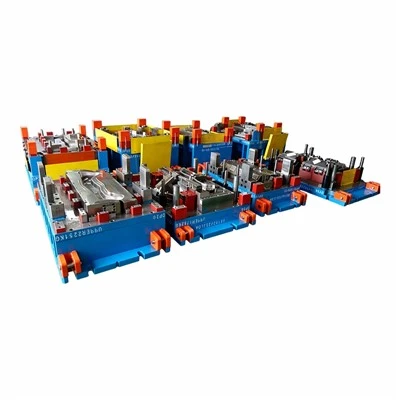
First off, let’s talk about the job lubricants actually do in stamping, because a lot of people outside this trade think it’s just to make the machine slide easier. Nah. When you’re stamping—whether it’s a high-strength steel bracket for a gas engine or an aluminum busbar that’s part of an EV’s battery pack—you’re basically shoving a flat sheet of metal into a die that’s shaped exactly like the part you want, at 50 strokes a minute, maybe more. The metal doesn’t just sit there; it’s stretching, bending, compressing, and sometimes even tearing if you don’t get the balance right. The lubricant’s job is twofold: first, it acts like a buffer between the metal and the die, so you don’t get what we call “die wear” or “gall”—those ugly, scratchy spots on the part that make it get sent back, and second, it lets the metal move exactly where you need it to, without fighting the die so hard that it cracks. For EV parts, this is way pickier than gas parts, I’ve noticed. Those battery busbars I mentioned? They’re thin, like soda-can thin, and made of pure aluminum—soft, but you can’t scuff ‘em because they’re carrying current. Scratch ‘em, and you’ve got hot spots that could mess with the battery’s efficiency, or even cause issues down the line. Gas parts might handle a little extra lube, but EV stuff? We’re not playing around.
Now, let’s get real about the specific requirements, because this isn’t a one-size-fits-all. I used to test a generic stamping lube for every job, and that’s how I learned to hate generic anything. First, there’s lubricity—plain and simple, how well it reduces friction. But it’s not just how slippery it is when you spray it on; it’s how it holds up during the entire stamping stroke. For high-strength steel (HSS) parts, like the brackets that hold an EV’s battery in place, you need a lube that can stand up to the extreme pressure when the die presses down. HSS is tough, so the metal and die are fighting hard, and if the lube breaks down mid-stroke, you get gall, which means bad parts and new die dies (yeah, that’s the term, die dies—costs us thousands to fix). For softer metals like aluminum or copper, which are huge for EV wiring and busbars, you need lubricity that’s smooth, but not too thick—thick lube leaves residue that’s a pain to clean, and if you’re dealing with electrical parts, residue is a no-go. It messes with conductivity, which is non-negotiable for EVs. I learned that lesson last year when a batch of battery busbars came back with sticky lube residue; we had to strip and re-stamp 2,000 parts, and that cost us a late fee. Ouch.
Next up: formability, which is just a fancy word for how well the lube lets the metal stretch or bend without cracking. For deep-draw parts—like the outer shell of an EV’s motor housing, which has to be curved to fit the motor—you need a lube that doesn’t get in the way when the metal is stretching. Too much friction, and the metal will tear right before it makes the shape you need. We tested a lube a while back that was great for thin steel, but when we used it on a deep-draw motor housing, it couldn’t keep up, and 15% of the parts cracked. We switched to a lube with higher extreme pressure (EP) additives, and that number dropped to less than 1%. EP additives are the secret sauce here—they’re the things in the lube that stick to the metal surface when pressure spikes, so even under that extreme die force, there’s still a buffer. For EV parts, which often have complex, tight bends to save space (batteries and motors need to fit in small areas), formability isn’t just a quality thing; it’s a safety thing. A cracked battery bracket? That’s a huge risk, not just a rejected part.
Cleanability is another big one, especially for EVs. Like I said earlier, EV parts don’t need leftover gunk messing with conductivity, fit, or even paint (for parts that get coated later). When we stamped parts for gas cars, we could use a heavier lube, because a quick degreaser bath fixed it. But with EV battery terminals or busbars? A heavy lube leaves a thin oil film that’s impossible to get off without harsh chemicals, and harsh chemicals can etch the metal, leading to corrosion. We had to switch to water-based lubricants a couple years back—they’re thinner, clean easier, and don’t leave residue. But here’s the catch: water-based lubes can cause rust if you leave the metal sitting, so we have to time our stamping line right—stamp, clean, coat, or ship immediately. No letting parts sit in a bin for a week, because rust on a busbar means it’s useless.
Then there’s compatibility with materials. This is where EV stuff really gets different. Gas car stamping is mostly steel, so lubes just need to work with steel. EVs use so much more aluminum, copper, and even some new alloys for battery components and lightweight parts. A lube that works on steel might eat away at aluminum, or cause corrosion on copper wiring. We tested a lube for a batch of copper busbars a few months ago, and it turned out it had sulfur additives that reacted with the copper, leaving dull spots that wouldn’t pass inspection. Switched to a sulfur-free, copper-safe lube, and all the parts cleared. No more scrap. That’s the kind of small mistake that can sink a supplier, honestly. You can’t cut corners here.
Wait, let’s not talk about temperature stability either. The stamping process generates a lot of heat—all that friction between the metal and die heats everything up, fast. If the lube breaks down at that heat, it stops working, and you get die wear and bad parts. For us, some of our high-speed lines run at 60 strokes a minute, so each part is stamped in less than a second. The lube has to hold up for that quick, hot press, and keep working for the next 60 parts. I once had a lube that was fine at room temp, but when the line heated up, it turned into a thin, watery mess. By the end of the shift, we had 500 scrap parts and a die that needed reworking. Never again do I pick a lube without checking its temperature rating.
Oh, and let’s talk about cost, because at the end of the day, we’re a business, not a non-profit. It’s tempting to go for the cheapest lube on the shelf, but that’s a false economy. Cheap lubes mean more scrap parts, more die maintenance, more downtime. I’d rather pay $0.50 more per gallon for a lube that cuts scrap by 10% than save $0.50 a gallon and lose thousands on rejected parts. For our EV parts, since the specs are stricter, there’s no cheap shortcut anyway—we have to use the right lube, full stop.
Now, let’s get to what this actually means for a stamping supplier like me. Every part we make, whether it’s for a gas car or an EV, needs a lube tailored to its material, shape, and use case. No exceptions. For example:
- A high-strength steel battery tray bracket: Need a lube with strong EP additives to handle extreme pressure, good lubricity to prevent gall, and it has to clean easily so the tray can get coated without issues.
- An aluminum battery busbar: Water-based, sulfur-free lube, low residue, gentle on soft aluminum, no additives that mess with conductivity.
- A deep-draw electric motor housing: Lube with excellent formability, good temperature stability, so the metal stretches without tearing and holds up during high-speed stamping.
I’ve learned this over 12 years in the game, through scrap parts, late nights, and a lot of trial and error. The worst mistake I ever made was ignoring a supplier’s advice to test a lube specific to aluminum for a batch of busbars. I went with what I knew, got 30% scrap, and lost a key client for 3 months while we fixed the mess. That’s when I stopped guessing and started treating lube selection like the critical step it is.
For anyone out there sourcing stamping parts—especially EV parts—don’t just ask “can you make this part?” Ask “what lube do you use, and why?” A good supplier will have a specific answer, not a generic one. For us, it’s non-negotiable that every lube we test gets put through a trial run on our line, with real parts, before we commit. We track scrap rates, die wear, and cleanability for every batch, so when a client asks, we can show them the numbers.
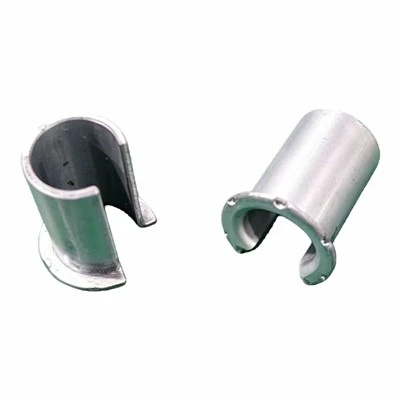
At the end of the day, lubricants for automotive and EV stamping aren’t just an afterthought—they’re a core part of getting the part right. They prevent scrap, protect tools, make sure parts fit, and for EVs, they even affect performance and safety. If you’re working with a stamping supplier that doesn’t have a strict process for picking the right lube, you should be worried. For us, it’s as important as the raw metal we start with, or the die we shape it into. And if you’re looking for a stamping partner that gets this—someone who’s tested, troubleshooted, and knows exactly what we need to make solid parts for both gas and EV vehicles, hit us up to chat sourcing. We’re here to make sure every part leaves our line ready to do its job.
Metal Stamping Dies Now, here’s the thing I always keep in mind: no two parts are the same, so no two lubes are the same. That’s the truth of our work. I could write 10 more pages about specific lube types, additive packages, and trial results, but that’s the high-level stuff anyone in this space needs to know. Don’t cut corners on lube. It’ll save you money, time, and a whole lot of headaches.
References
- Automotive Stamping Lubricants: Selection, Performance, and Application, Society of Manufacturing Engineers, 2021.
- EV Stamping Part Requirements: Material, Process, and Quality Standards, International Journal of Automotive Manufacturing Technology, 2022.
- Tribology of Sheet Metal Forming: Lubrication, Wear, and Surface Finish, Taylor & Francis, 2020.
Dongguan Changdong Tool & Die Co., Ltd.
With abundant experience, we are one of the most reliable automotive & ev stamping parts manufacturers and suppliers in China. Please feel free to buy advanced automotive & ev stamping parts made in China here from our factory. Good service and quality products are available.
Address: No. 56-B, Fumin South Road, Dalang Town, Dongguan City, Guangdong Province, China
E-mail: sales@stamping-die.com
WebSite: https://www.metalstampingdie.com/
