Hey there! I’m a supplier of Woodpulp PET Nonwoven Fabric, and today I wanna chat about one of the most common questions I get: What is the weight per square meter of Woodpulp PET Nonwoven Fabric? Woodpulp PET Nonwoven Fabric

Let’s start with the basics. Woodpulp PET Nonwoven Fabric is a unique material that combines the natural properties of woodpulp with the durability and strength of PET (polyethylene terephthalate). This combination results in a fabric that’s versatile, eco – friendly, and has a wide range of applications.
The weight per square meter, often referred to as GSM (grams per square meter), is a crucial factor when it comes to this fabric. Why? Well, the GSM directly affects the fabric’s thickness, strength, and performance.
A lower GSM, say around 20 – 50 grams per square meter, gives you a lightweight and more delicate fabric. This type of fabric is great for applications like facial masks, tea bags, or certain types of packaging where you need a thin and breathable material. It’s also more flexible and can be easily folded or shaped.
On the other hand, a higher GSM, maybe 100 – 300 grams per square meter, creates a much sturdier fabric. This is ideal for things like heavy – duty packaging, industrial wipes, or even some types of filtration systems. The increased weight means more material, which in turn provides better strength and durability.
Now, how do we determine the right GSM for a specific application? It all boils down to the requirements of the end – use. For example, if you’re making a disposable medical gown, you’d want a fabric with a moderate GSM. It needs to be strong enough to withstand some movement and contact, but also breathable to keep the wearer comfortable. A GSM of around 60 – 80 grams per square meter would be a good choice here.
If you’re in the automotive industry and need a fabric for interior linings, a higher GSM might be necessary. The fabric has to be tough enough to resist wear and tear from regular use, so a GSM of 150 – 200 grams per square meter could be more suitable.
As a supplier, I’ve seen a lot of different projects and requirements. And one thing I’ve learned is that the GSM can also affect the cost. Generally, a higher GSM fabric will cost more because it uses more raw materials. But it’s important to balance cost with performance. You don’t want to over – spend on a fabric that’s too heavy for your needs, but you also don’t want to go too light and end up with a product that doesn’t perform well.
Another aspect to consider is the manufacturing process. The way the Woodpulp PET Nonwoven Fabric is made can also influence the GSM. There are different methods, such as spunbonding, melt – blowing, and needle – punching. Each method can produce fabrics with different GSM ranges and characteristics.
Spunbonding is a popular method that can produce fabrics with a relatively wide range of GSM. It’s fast and efficient, and can create fabrics that are strong and uniform. Melt – blowing, on the other hand, is often used to make fabrics with a very low GSM. These fabrics are extremely fine and are commonly used in applications like air filters. Needle – punching is great for creating thicker, more textured fabrics with a higher GSM.
When it comes to our Woodpulp PET Nonwoven Fabric, we offer a variety of GSM options to meet different customer needs. Whether you’re looking for a light – weight fabric for a small – scale project or a heavy – duty fabric for an industrial application, we’ve got you covered.
I’ve had customers who were initially unsure about which GSM to choose. But by discussing their specific requirements, we were able to find the perfect match. For instance, a customer who was making eco – friendly shopping bags wanted a fabric that was both strong and had a certain look. We recommended a fabric with a GSM of around 80 grams per square meter. It was strong enough to hold the weight of groceries, and it also had a nice texture that made the bags look more appealing.
In addition to the GSM, other factors can also affect the performance of the Woodpulp PET Nonwoven Fabric. Things like the quality of the woodpulp and PET used, the finishing treatments applied to the fabric, and the overall manufacturing quality all play a role.
We take great pride in our manufacturing process. We source high – quality woodpulp and PET materials and use state – of – the – art equipment to ensure that our fabrics meet the highest standards. Our quality control team checks every batch of fabric to make sure it has the right GSM and other properties.
If you’re in the market for Woodpulp PET Nonwoven Fabric, I encourage you to think carefully about the GSM you need for your project. Don’t be afraid to reach out and ask questions. We’re here to help you make the best decision. Whether you’re a small business owner looking for a unique packaging solution or a large – scale manufacturer in need of a reliable fabric, we can work with you to find the perfect fabric for your needs.
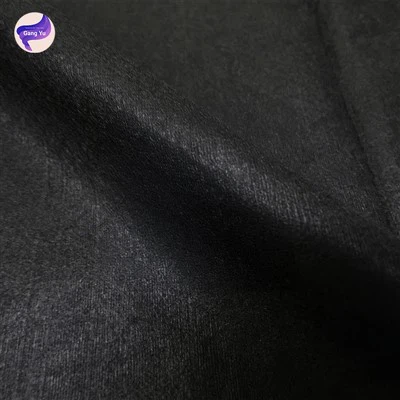
So, if you’re interested in learning more about our Woodpulp PET Nonwoven Fabric or have any questions about GSM or other aspects of the fabric, don’t hesitate to get in touch. We’re always happy to have a chat and discuss how we can meet your requirements. Let’s work together to find the best fabric for your next project!
Biodegradable Nonwoven Fabric References:
- Textile Industry Handbook: Nonwoven Fabrics
- Research papers on Woodpulp PET Nonwoven Fabric properties and applications
Hangzhou Gang Yu Health Products Co., Ltd.
Hangzhou Gang Yu Health Products Co., Ltd. is well-known as one of the leading woodpulp pet nonwoven fabric manufacturers or suppliers in China, also supports customized service. Please feel free to wholesale cheap woodpulp pet nonwoven fabric made in China here and get quotation from our factory. Quality products and low price are available.
Address: No.1 Yumin Road, Dangwan Town,311221, Xiaoshan District, Hangzhou City, Zhejiang Province, China (Mainland)
E-mail: sales@gynonwovens.com
WebSite: https://www.gynonwovens.com/
