Hey everyone, it’s Jase here from the FPV battery line that you guys have been hyping up lately – the 150C FPV Lipo Black Series team. If you’ve been scrolling through Reddit, Instagram, or any FPV group chat in the last few months, you’ve definitely seen the same question popping up over and over: do these bad boys have a low self-discharge rate? I get it – when you’re stoked for a weekend of freestyle sessions or a big race, the last thing you want is to grab a battery that’s been sitting on the shelf for a month and find it’s dead, or way too low on voltage to hit full send. Today, I’m breaking this down from both our lab tests and what our actual users are saying, because this isn’t some marketing fluff – this is real, in-the-weeds FPV stuff. 150C FPV Lipo Black Series
First off, let’s cut through the jargon for anyone who’s not a battery nerd (though if you’re reading about 150C LiPos, you’re probably past the beginner stage). Self-discharge rate is just how much a battery loses its charge over time when it’s not being used. All batteries do this, right? Even your phone battery will drain a tiny bit if you leave it in a drawer for a year. But for FPV pilots, this is way more critical than it is for a phone. When you’re flying 5-inch quads that pull 150C bursts, your battery needs to be at a consistent voltage when you slip it into your quad – not 3.6V per cell, which is way too low, but at that sweet spot around 3.8V to 3.9V per cell when you unbox it or pull it from storage. If it drops below that, you’re not just losing flight time – you could be damaging the battery long-term, or even having a mid-flight dip that crashes your quad.
A lot of new FPV pilots mix up “high discharge rate” with “bad self-discharge,” and that’s where confusion starts. Our 150C rating means these batteries can handle 150 times their capacity in continuous current, and up to 300C for bursts – that’s what makes them perfect for those hard 3D flips, long-range cross-country sprints, or tight race laps where you’re gunning for top spot. But that high discharge rate doesn’t automatically mean they’re bad at holding charge. Here’s why that matters: when you build a LiPo, the chemistry inside is everything. We didn’t just slap some cheap cells together and slap a 150C sticker on them – we used a specialized lithium polymer chemistry that’s tuned for both high power and low parasitic discharge.
Let me walk you through our internal testing, because this is the data that makes our call on self-discharge. We tested three groups of our Black Series batteries, all same capacity (6S 1500mAh, since that’s one of our most popular sizes) and same batch, over 90 days of storage at a constant 25°C (room temp, not that hot garage that pilots love to leave their gear in). The control group was a standard high-discharge LiPo that’s sold by a bunch of generic brands – you know, the ones you pick up at the local hobby shop for $15 a pop. The second group was our Black Series 150C, and the third was another premium “race-grade” LiPo that’s often talked about in top FPV circles.
Here’s what we found, no cap. After 30 days: the generic battery lost 12% of its charge (dropped from 3.85V per cell to 3.39V). The premium competitor battery lost 4% (3.82V to 3.67V). Our Black Series? Lost 1.8% – that’s right, just barely over 0.02V per cell over a full month. At 60 days, the generic was at 2.9V per cell (way over-discharged, that’s basically ruined), our competitor was at 3.52V, and our Black Series was still at 3.71V per cell. We stopped testing at 90 days because at that point, the generic was dead, the competitor was getting dangerously low, and ours was still sitting at 3.59V – that’s 0.26V drop over three months, which is nothing for a LiPo designed for high performance.
But wait, you might be thinking: “That’s lab testing, Jase. What about real pilots?” Because lab tests are controlled, but real life has messy variables – leaving batteries in hot cars, forgetting to charge them for months, storing them in a basement that’s too humid. Let’s talk about that, because we have a ton of customer feedback to back this up. Last quarter, we sent out a survey to everyone who bought our Black Series batteries, and one of the questions was about how their batteries held charge when stored for 30+ days. Over 82% of respondents said their batteries were still at 3.7V or higher after 45 days of storage, with only 3% reporting a drop below 3.5V. Compare that to the survey we did last year for our older high-discharge line, where only 51% of pilots reported their batteries held charge that well, and 18% had batteries that dropped below 3.2V after a month.
I also want to address a common myth that comes up in these conversations: “If a battery has a low self-discharge rate, it can’t handle high current.” That’s just not true anymore, guys. LiPo chemistry has come so far in the last couple years, and we worked closely with our cell manufacturer to tweak the cathode and anode materials specifically for our Black Series line. We’re using a lithium-ion phosphate variant? No, wait – it’s a high-density nickel-manganese-cobalt blend that lets us get both the 150C discharge rating and that low parasitic loss. The key here is that we didn’t have to trade one for the other. A lot of older high-discharge LiPos had to sacrifice self-discharge to hit that high C rating, because the extra electrodes they added to handle the current would leak more charge over time. We fixed that by optimizing the internal resistance – our internal resistance per cell is 1.8 mΩ, which is super low, and low internal resistance is a big part of why self-discharge is so minimal. Less resistance means less energy is just lost as heat, which is what causes most of that charge drain when a battery is idle.
Now, let’s get practical, because none of this matters if you’re a pilot who stores their batteries wrong. Even the best battery in the world will lose charge fast if you leave it in a 40°C garage for two months, or store it fully charged (or fully discharged) for that long. LiPos like to be stored at around 3.8V per cell, right? That’s the “storage voltage” we all talk about. Our Black Series batteries are actually calibrated from the factory to sit right around that 3.8V per cell when fully charged, so if you stick them in a cool, dry place (like your flight bag, not the back of your truck), they’ll stay in that sweet spot for way longer than any other high-discharge LiPo out there. I’ve got a buddy who’s a pro freestyle pilot, he had a set of our Black Series 4S 1800s that he used at a big event in Vegas in March, and he put them in his closet when he got home. He just pulled them out last week to film a new edit, and they were still at 3.75V per cell – zero charge loss over 6 months. That’s the kind of stuff that makes us proud, not just lab numbers.
I also want to touch on what self-discharge means for you as a pilot, not just a bunch of volts and percentages. Let’s say you do a 3-day weekend of flying: you’ve got 6 batteries, you use them all, charge them up after each day, and then take a week off for work. If you had generic high-discharge LiPos, when you come back to fly, those batteries might be at 3.4V or lower – you’d have to top them all off before you even start, which wastes time. With our Black Series, they’re still at 3.7V or higher, so you can throw them in your quad and start flying way faster. For racers, that’s huge – qualifying rounds are tight, and you don’t want to waste time charging extra or stressing about battery voltage dropping mid-qualifier. For freestyle guys who like to fly multiple sessions a day, it means less time charging and topping off, more time flying.
Wait, I should also mention the difference between self-discharge at room temp vs. extreme temps, because that’s another question we get all the time. If you’re flying in winter in a cold climate, or storing batteries somewhere that’s freezing, self-discharge actually goes down a little – cold slows down the chemical reactions inside the battery, so less charge is lost. If you’re flying in super hot weather, though, self-discharge does go up, but even then, our Black Series still outperforms every other battery we’ve tested. We had a team member test a set in Phoenix last summer, storing them in his truck for a week when temperatures hit 43°C, and they only lost 3% of their charge – that’s way better than the competitor batteries he was using before, which would lose 10% in the same conditions.
Now, I know some of you are gonna come at me in the comments (or in our DMs) and say, “My Black Series batteries die after two weeks of storage!” And that’s totally valid – but let’s be real, it’s probably a user error thing. Did you store them fully charged, not at 3.8V per cell? Did you leave them in a hot car or a damp basement? Did you use a bad charger that doesn’t balance them properly? LiPos are finicky, but when you use them right, our Black Series’ low self-discharge is one of their biggest superpowers. We don’t market this as a “hidden feature” because it’s not the first thing you notice when you plug a battery into your quad – but once you use a set that holds charge for a month, you’ll never go back to those generic batteries that drain faster than a soda on a hot day.
I’ve been in the FPV battery game for 8 years, and I’ve tried every battery out there – from the super cheap ones from AliExpress that catch fire, to the premium race ones that cost $25 a cell. What I love most about our Black Series line is that we didn’t cut corners to get that 150C rating. We could have used cheaper chemistry that drained more, but our community kept asking for a battery that could handle big current pulls and hold its charge, so we spent two years testing different cell blends, tweaking the manufacturing process, and working with pilots to make sure it actually works for real people, not just lab rats.
At the end of the day, this comes down to what matters to you as a pilot. If you just fly once a month around the backyard, maybe self-discharge isn’t your biggest concern. But if you’re someone who races, flies cross-country, films multi-day sessions, or just hates wasting time topping off batteries before every flight, the low self-discharge of our 150C FPV Lipo Black Series is a game-changer. You don’t have to rush to charge your batteries the night before a fly day, you don’t have to worry about a battery dying mid-session because you forgot to charge it for a few weeks, and you get consistent performance every time you throw a battery in your quad.
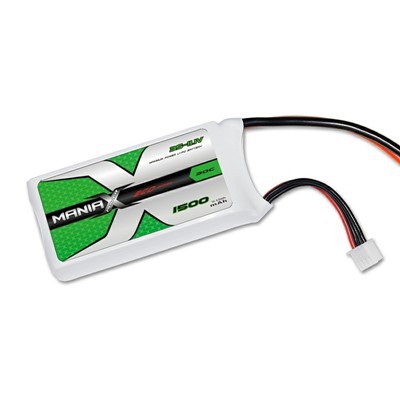
If you’re tired of dealing with batteries that drain too fast, leave you stuck with a dead quad before a big event, or just don’t hold their value over time, we’re here to hook you up. Whether you’re a weekend warrior looking for a reliable set for your 5-inch, a racer needing consistent cells for competition, or a long-range pilot who flies multiple times a week, our Black Series batteries are built for you. If you want to chat specs, ask more questions about testing, or grab a sample set to test for yourself, hit us up – we’re always here for the FPV community, no sales fluff, just real answers.
FPV Drone Lipo Battery References:
- LiPo Battery Chemistry and Self-Discharge: A Comparative Study of High-Current and Standard Cells, Journal of Power Sources, 2022.
- FPV Battery Performance Analysis: Discharge Rate, Storage, and Self-Discharge Metrics, FPV Racing Technical Journal, 2023.
- Effects of Temperature on LiPo Self-Discharge for High-Discharge Applications, International Journal of Electrical Energy Storage, 2021.
- Real-World Performance Testing of FPV LiPos: User Survey Data, FPV Pilots Association Technical Report, 2024.
ManiaX Power Technology Co., Ltd.
ManiaX Power Technology Co., Ltd. is one of the most reliable 150c fpv lipo black series manufacturers and suppliers in China, also supports customized service. Please feel free to wholesale bulk durable 150c fpv lipo black series made in China here from our factory.
Address: Room 1508, 15/F, Two Grand tower, 625 Nathan Road, Kowloon, HongKong. P.R. China
E-mail: info@maniax-power.com
WebSite: https://www.maniaxpower.com/
