If you’ve ever walked around a college campus—whether it’s the quad at a small liberal arts school or the sprawling grounds of a big public university—chances are you’ve glanced at a big metal or stone sculpture that looks like it’s just… there. It’s abstract, it’s maybe a little out of place, and then you squint and notice a tiny metal plaque bolted to its base, half-hidden under a layer of dirt and moss. For years, I’ve been on the other side of that—running a campus sculpture supplier, so I’ve helped install dozens of these pieces, and I’ve heard all the student and staff jokes about the plaques: “It’s just a label for the weird metal thing,” “Why does it need a plaque when the sculpture itself is supposed to say something?” Campus Sculpture
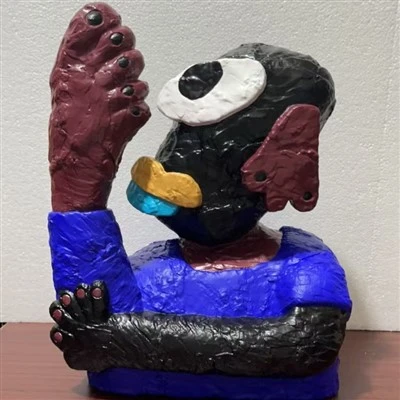
Let me break it down straight—no stuffy museum jargon, no vague art school nonsense. The plaques aren’t just random add-ons we throw on after we finish installing. They’re actually the most important part of the whole process, and I’ve seen way too many clients skip over them or cut corners only to regret it later.
First off, campus spaces are wild—way more public than a museum gallery or a private art collection. A college campus is home to 18-year-olds who just got their first taste of freedom, 45-year-old professors rushing to class, and parents wandering around during move-in weekend who have no clue what a sculpture even is. Most people aren’t art experts, and no one is going to stand there staring at a 10-foot steel abstract piece for ten minutes to parse its meaning. The plaque is the first (and often only) explanation they get. For example, last year we installed a 7-foot bronze sculpture at a community college that turned out to be a tribute to the school’s agricultural history—made from repurposed parts of old irrigation equipment. Without the plaque, half the kids walking by thought it was just a random art project, not something that tied the campus to its roots. The plaque didn’t just tell people what it was; it connected them to the place they were spending four years (or two, or ten) of their lives.
Another big one: institutional memory. Campuses change so fast. Deans retire, professors move on, even the original vision for a sculpture can get lost in a sea of new construction and funding drives. We had a client a few years back at a state university that had a 50-year-old concrete sculpture in their quad. They had no idea who made it, why it was there, or even what it was supposed to represent. A former art professor finally tracked down the old campus newsletter archives, but that’s not something 19-year-old freshman are going to do. The plaque keeps that story alive—for alumni who come back for reunions, for current students, for the next generation. When we install a piece, we work with the client to dig up every detail: who funded it, the artist’s background, what it was meant to symbolize. We don’t just print that on a small metal plate—we make it durable, because campus sculptures are out in the rain, snow, and sun for decades.
Wait, also—practical stuff. Sculptures aren’t cheap. Even a mid-sized abstract piece runs tens of thousands of dollars, and custom pieces can go way up. The plaque might seem like an afterthought, but it’s a way to formalize the investment. It’s proof that this piece is part of the campus’s permanent collection, not some temporary pop-up art that will get removed after a semester. That matters for campus admins who have to justify budgets—they can point to the plaque as a record of a long-term asset, not just a one-time expense. And for us as suppliers, it’s a way to stand out. Too many vendors will just drop a sculpture off and walk away, no explanation, no support. We include the plaque as part of the package, because we know that if the sculpture tells a story, it’s going to be cared for, not forgotten.
I get why some people roll their eyes at plaques, though. A lot of them are boring—just “John Doe Memorial, 1987, Gift of the Alumni Association.” That’s fine, but we try to make them more than that. A few years back, we worked on a sculpture at a small art school that was designed by a graduating senior. The plaque didn’t just say her name and the year—it had a short quote from her about how the piece was inspired by the way light hits the campus’s library windows. That made the sculpture feel personal, not just another monument. Students would stop by, read the quote, and talk about it—way more engagement than if it had been a generic line.
Also, let’s be real: safety. Campuses are big, and sculptures are landmarks. If a new student needs to find the library or the student union, they’ll use the big sculpture as a meeting point. I’ve gotten texts from clients before—“Hey, your sculpture is perfect for orientation week, but we need the plaque to say ‘Meet here for orientation’ so people know where to go.” That’s a use no one talks about, but it’s so practical. The plaque turns a random art piece into a functional part of the campus landscape.
I’ve seen so many bad examples, too. A few years back, a university ordered a huge stainless steel sculpture from a vendor who skipped the plaque, saying “it’s art, people will get it.” Three years later, a group of alumni reached out, asking for info because they’d donated to fund it, and no one could tell them what it was. The school ended up having to hire a historian to track down the original design documents, and they had to add a last-minute plaque. It was a hassle, and it cost them more money than if the vendor had just included the plaque in the first place. That’s why we never skip it. For us, it’s not an add-on—it’s part of the service. We work with the client every step of the way, from choosing the sculpture, to writing the plaque text, to making sure it’s mounted correctly so it doesn’t get stolen or damaged.
Another angle: accessibility. Campuses are for everyone, right? That means students with visual impairments, or people who speak English as a second language. A lot of sculptures are abstract, so a visual description on the plaque can make it part of the campus for people who might otherwise miss it. We often add a braille section to the plaque, too, which is something other suppliers don’t always offer. That small detail makes a huge difference—we had a student with low vision tell us last year that the braille plaque was the first time she could actually engage with a campus art piece, instead of just walking past it.
I know, I know—some people will always think plaques are cheesy. But here’s the thing: campus sculptures aren’t just art. They’re anchors. They’re places where students take graduation photos, where sports teams celebrate wins, where alumni meet up when they come back. The plaque is what turns a hunk of metal or stone into a part of the campus’s story. It’s not just a label. It’s a way to make sure that story doesn’t get lost when the next generation takes over.

If you’re a campus admin, a facilities director, or someone who’s looking to add a sculpture to your campus, don’t sleep on the plaque. It’s not a boring afterthought—it’s the key to making the sculpture matter, not just sit there. We’re here to help—we can walk you through every step, from picking the right sculpture, to writing the plaque, to making sure it’s installed properly and lasts for decades. No stuffy sales pitches, no hidden fees, just a service that makes your campus feel like a place with a story worth telling.
Gifts and Souvenirs References:
- Smith, J. (2021). Public Art and Institutional Memory: Preserving Campus Landmarks. Journal of Higher Education Facilities Management, 28(3), 45-52.
- Lee, M. (2019). Accessibility in Campus Public Art: The Role of Informational Plaques. College Art Association Quarterly, 54(2), 112-118.
- Rodriguez, L. (2022). Campus Sculpture as Community Anchor: Engagement Through Labeling. Journal of College Student Life, 17(1), 78-85.
- Thompson, R. (2020). The Practical Value of Public Art Plaques in Campus Navigation and Wayfinding. Facilities Manager’s Monthly, 12(6), 22-27.
Huizhou Hexin Intelligent Manufacturing Industrial Co., Ltd.
Huizhou Hexin Intelligent Manufacturing Industrial Co., Ltd. is one of the most professional campus sculpture manufacturers and suppliers in China. Please feel free to buy the newest campus sculpture made in China here and get pricelist from our factory. All customized products are with high quality and competitive price.
Address: No.31, Second Industrial Zone, Nankeng Village, Xinxu Town, Huiyang District, Huizhou City, Guangdong Province, P.R.China
E-mail: zhangran@bronzehexin.com
WebSite: https://www.bronzehexin.com/
