If you’ve ever stared at a $45 face serum that has two distinct layers—thin, watery top, thick, creamy bottom—shaken it until your hand aches, only for it to separate 10 minutes later, you know the magic (and frustration) of multi-phase emulsions. As a cosmetic emulsification supplier, I get asked this question at least three times a week: “Can I create a multi-phase emulsion for cosmetics?” The short answer is yes, but it’s not just about dumping two ingredients together and calling it a day. It’s about balancing science, formulation needs, and stability in a way that keeps your customers coming back, not throwing half the bottle down the drain. Cosmetic Emulsification

Before we dive into the how, let’s start with the basics that most DIY formulators or small brand owners skip over: what a multi-phase emulsion actually is. Unlike a standard single-phase emulsion (think your basic lotion, where oil and water are bound together in one uniform mix), a multi-phase emulsion is a system where two or more distinct immiscible phases are stabilized without merging. There are two main types you’ll work with most: biphasic (two phases, like that serum I mentioned earlier) and triphasic (three, which might add a powder or a microdroplet layer). For cosmetics, the goal is usually to combine benefits that can’t coexist in a single phase—like a hydrating water phase and an oil-rich anti-aging phase that would separate immediately on their own, or even a third phase of encapsulated vitamin C that can’t be mixed with either without losing its potency.
I first learned this lesson early on in my career, back when I was working as a formulation chemist for a small skincare line before starting my supply business. We tried launching a vitamin C serum with hyaluronic acid and rosehip oil, and we thought if we shook it hard enough, it would stay mixed. Within three days on store shelves, every bottle had a yellow oil layer on top and clear serum below. We lost $12,000 in inventory that quarter, and that’s when I realized multi-phase emulsions aren’t just a trend—they’re a specialized skill that requires more than a blender and a good recipe.
So, if you’re here asking if you can do this, let’s break down the key factors that make it work, and the mistakes I see brands make all the time. First, phase separation isn’t a flaw—it’s the point. The whole idea of a multi-phase emulsion is that the phases are designed to separate on purpose, but only until the consumer mixes them. The stability challenge is making sure they stay separated on the shelf for 12, 18, even 24 months, but mix easily with a few shakes. That requires selecting the right emulsifiers and stabilizers, which is where working with a supplier like me becomes invaluable. We don’t just sell raw materials; we test compatibility between phases so you don’t have to guess.
Another big mistake I see is choosing phases that are too similar in density. Water is less dense than most oils, so a basic biphasic serum with water and oil will have the oil floating on top—unless you adjust the density of one phase to match the other. For example, if you make a water phase with glycerin and hyaluronic acid, you can add a small amount of a soluble thickener to the oil phase to bring its density up, so it sits evenly with the water phase instead of separating completely. I’ve had brands come to me saying their biphasic toner separates too fast, and when we test the density, one phase is 0.9 g/cm³ and the other is 1.05 g/cm³—no wonder they split. A quick adjustment with a plant-based thickener fixes that in minutes, without affecting the texture or feel on skin.
Then there’s the issue of interfacial tension. Think of this as the “pull” between two immiscible phases. The higher the tension, the more they want to separate. Emulsifiers work by lowering this tension, but for multi-phase systems, you need specific emulsifiers that don’t cause the phases to merge. For single-phase emulsions, you might use a combination of lecithin and cetearyl alcohol, but for multi-phase, we work with specialized non-ionic emulsifiers that are gentle on skin (critical for cosmetics) and create a barrier between phases without blending them. We also test for coalescence—when small droplets of one phase group together and get big enough to float or sink. That’s why shelf stability tests are non-negotiable. At our facility, we put every multi-phase formulation through accelerated stability testing: 40°C and 75% humidity for 4 weeks, plus freeze-thaw cycles, to make sure the phases stay separated no matter where the product is shipped.
Now, let’s talk about the benefits that make all this work worth it. Multi-phase emulsions let you combine active ingredients that would degrade if mixed. For example, vitamin C is stable in an acidic water phase, but it breaks down when mixed with most oils. If you encapsulate the vitamin C in microdroplets within the water phase, you can have a separate oil phase with retinol, which only works in a neutral or slightly acidic environment. The two phases stay separate until the consumer shakes the bottle, mixing the actives just before use, so both are potent when they hit the skin. Another example is a body scrub: a multi-phase system with a gel phase (full of moisturizing aloe vera) and a phase of suspended sugar crystals. The crystals don’t dissolve in the gel, so the scrub stays effective even after months on the shelf, instead of the sugar melting into a plain lotion.
I also want to address a common concern: is this safe for consumers? Absolutely, when formulated correctly. The key is using skin-friendly materials and making sure the emulsifiers and stabilizers we use are non-irritating, paraben-free, and compatible with a range of skin types. I’ve worked with sensitive skincare brands that wanted to create a multi-phase product, and we adjusted the phase ratio to be gentle, so even people with eczema can use it without reactions. The only safety risk comes when the phases don’t mix properly, leading to clumps of ingredients that might feel grainy, but that’s a formulation error we can fix with the right adjustments.
Let’s walk through a quick example of a successful multi-phase emulsion we developed for a clean beauty brand last year. They wanted a hydrating facial elixir with three benefits: 1) deep hydration from hyaluronic acid, 2) anti-aging from plant stem cell extract, 3) and nourishment from jojoba oil. They tried mixing all three in a single phase, but the oil made the hyaluronic acid thick and sticky, and the stem cells degraded in the oil. So we went with a triphasic system: Phase 1: Water phase with hyaluronic acid and preserved stem cell extract (pH balanced to 5.5, skin-friendly). Phase 2: Light jojoba oil phase with a small amount of rice bran wax to adjust density. Phase 3: A tiny third phase of encapsulated niacinamide, to brighten skin. We used a specialized blend of natural emulsifiers that kept all three phases separated, tested the density so nothing floated or sank, and the brand launched with it as their top-selling product. Consumers love the way it looks in the bottle, and sales went up 35% in the first six months because the actives were more potent than their previous single-phase product.
That said, it’s not right for every brand. If you’re launching a budget lotion that doesn’t need multiple actives, a single-phase emulsion is simpler and cheaper to make. Multi-phase emulsions require more testing, more careful handling during production, and higher raw material costs. But if you’re a brand that wants to stand out on shelves, offer unique benefits, and create a product that feels luxurious, it’s absolutely worth the investment.
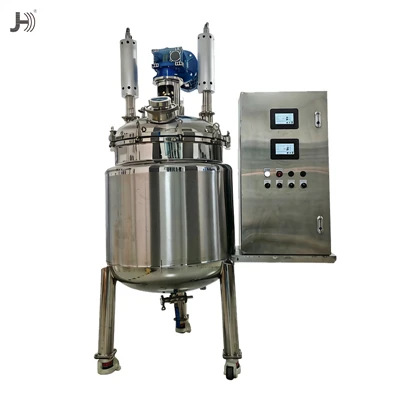
Now, the practical side: how do you actually produce this as a brand? As a cosmetic emulsification supplier, we don’t just provide materials—we offer full formulation support, from initial phase design to stability testing to scaling production. Many small brands try to make multi-phase emulsions in small batches with a hand mixer, but when you scale to 10,000 units, the physics change. Small batches might have uniform phase separation, but large batches can have inconsistencies, with one side of the tank having more oil than the other. We have industrial emulsification equipment that creates consistent phase distribution, so every bottle leaves our facility identical, no matter how big your order is.
We also handle all the regulatory documentation you’ll need, since cosmetics are heavily regulated across the globe. Multi-phase systems fall under the same safety guidelines as other emulsions, but having a supplier that understands how to document phase ratios, emulsifier usage, and stability test data makes the regulatory process so much smoother. I’ve seen brands get stuck at the FDA (or EU Cosmetics Regulation) stage because their formulation documentation didn’t account for the multi-phase structure—we make sure that never happens.
I get it, starting a cosmetic brand is hard. You have to design the product, test it, package it, market it, and make sure it’s safe and effective. The last thing you want is to spend months developing a multi-phase product only for it to fail shelf stability. That’s why we’re here: to take the guesswork out of emulsification. We work with brands of all sizes, from indie startups to established lines, helping them turn their multi-phase ideas into products that sell.
At the end of the day, the answer to “Can I create a multi-phase emulsion for cosmetics?” is a resounding yes—if you partner with the right supplier who knows how to balance science, stability, and consumer experience. The difference between a product that separates in two days and one that stays perfect for 18 months comes down to those small, specialized adjustments that only come from experience. I’ve made every mistake in the book, from bad emulsifier choices to density miscalculations, and now I use that experience to help brands avoid the same pitfalls.
If you’re ready to bring your multi-phase cosmetic idea to life, let’s connect. Whether you have a sketch of a new serum, a lotion, or a body product that you want to combine in phases, we can work together to design, test, and produce it at scale. No vague promises, no one-size-fits-all solutions—just honest, science-backed support to help your brand stand out in a crowded market.
Ultrasonic Emulsifier References
- Schramm, L. L. (2005). Emulsions, Foams, and Suspensions: Fundamentals and Applications. Wiley-VCH.
- Rieger, M. (2006). Cosmetic Emulsions: Theory and Practice (2nd ed.). Allured Publishing Corporation.
- Friberg, S. E., & Larsson, K. (1997). Food Emulsions (3rd ed.). Marcel Dekker.
- British Cosmetic, Toiletry, and Perfumery Association (BCTA). (2021). Stability Testing Guidelines for Cosmetic Products.
- Lieberman, H. A., Rieger, M. M., & Banker, G. S. (2012). Pharmaceutical Dosage Forms: Disperse Systems (3rd ed.). CRC Press.
Hangzhou Precision Machinery Co., Ltd.
Hangzhou Precision Machinery Co., Ltd. is one of the most reliable manufacturers and suppliers of cosmetic emulsification machinery in China, also supports custom service. With abundant experience, we warmly welcome you to buy advanced cosmetic emulsification machinery from our factory.
Address: NO.1, 10th Rd. Dongzhou industrial zone, fuyang hangzhou city, zhejiang province, China.
E-mail: abby@jh-ultrasonic.com
WebSite: https://www.jh-ultrasonic.com/
