If you’ve ever stood next to a sheet metal brake or press brake during a job run, watching a perfectly formed bracket turn into a scrap part because of a 0.5mm bend error, you know how costly those small miscalculations can be. As a sheet metal fabrication machinery supplier, I spend most of my days talking to operators, shop managers, and quality leads who’ve dealt with the same frustration: a machine that should get the bend right 99 times out of 100, but throws a curve ball every time a new job hits the floor. Over the past 12 years, I’ve worked with nearly 200 fabrication shops, from one-man garages to large aerospace component manufacturers, and the truth is most accuracy issues aren’t caused by a faulty machine. They’re caused by small, avoidable gaps in setup, programming, or basic maintenance that even seasoned operators overlook. Sheet Metal Fabrication Machinery

Let’s start with the first, and most underrated, step in getting a consistent bend: material verification. I can’t tell you how many times I’ve watched an operator load a sheet of 16-gauge mild steel without checking the actual thickness, not just the print. Blueprints list nominal thickness, but steel mills can deliver material with a ±0.1mm variance, and even a 0.05mm difference changes how the metal springs back after bending. Springback is the inherent tendency of sheet metal to return to its original shape after being formed, and it’s the single biggest contributor to bend inaccuracy. For example, 304 stainless steel has a springback rate of 12–15 degrees for a 90-degree bend, while mild steel is closer to 6–8 degrees. But that rate shifts if the material is thinner or thicker than specified. Last year, a job shop in Detroit called me because their brackets were failing a NASA inspection, and they’d spent $10,000 recalibrating their press brake, only to find out they’d been using 15.5-gauge steel instead of the 16-gauge called for. The fix? A 10-minute material thickness check with a digital micrometer before loading every sheet. That’s a small step, but it’s saved their team 20+ hours a month in rework.
Next up is die and punch alignment, a step that’s often rushed to keep production moving. I’ve seen operators line up the die and punch by eye, or use a makeshift scrap piece to test alignment, but even a 0.1mm offset can throw a bend off. Modern CNC press brakes come with backgauge systems and laser alignment tools, but most operators only use the basic alignment function, not the fine-tuning option that adjusts for material thickness. When setting up a bend, the die V opening should be exactly 8 times the material thickness for mild steel—this is the industry standard that balances bend force and material stretch. For example, 16-gauge steel needs a 12.8mm V die. If you use a wider die, the metal stretches more, leading to over-bending; too narrow, and you’ll get excessive springback, plus increased wear on the die and punch. I train all my clients to do a test bend on a scrap piece of the exact material they’re using, then measure the angle with a digital protractor and adjust the backgauge or bending force accordingly. One fabrication client in Chicago increased their bend accuracy by 22% after implementing this test bend step—they’d been skipping it because they thought it wasted time, but it actually cut down on 4 hours of rework per week.
Programming is another area where accuracy breaks down, and it’s not just about inputting the right numbers. Most shops use CAD/CAM software to generate bending programs, but a lot of teams don’t update their software to account for real-world machine behavior. For example, if your press brake has a slight deflection when bending long sheets—say, a 2-meter panel that bows 0.3mm at the center under pressure—the standard program will not compensate for that deflection. Newer CNC press brakes have crowning systems that adjust the ram’s force along its length to counteract deflection, but only if the program is set to use that feature. Many operators don’t enable crowning for smaller jobs, or input the wrong deflection value for their material type. I also see a lot of incorrect bend radius inputs in programming. The blueprint might call for a 5mm bend radius, but the operator will input 4mm because they think it’s easier, leading to material cracking on the outer edge. It’s a small change in input that leads to a big error in the final part.
Maintenance is the unsung hero of consistent bend accuracy, and it’s not just about greasing the machine. I’ve worked with clients who have 10-year-old press brakes that still get better accuracy than brand-new machines because they do weekly checks on critical components. Backgauge sensors, for example, can get covered in metal shavings or dust, which makes them misread the position of the sheet. A quick wipe with a microfiber cloth every shift can prevent that. Ram clearance is another key point: over time, wear on the guide rails can cause the ram to tilt slightly, leading to uneven bend angles. Most newer machines have a clearance check function that measures the gap between the ram and bed every month, and adjusting the guide rails takes less than 30 minutes. I always advise my clients to replace worn punch tips before they get pitted or chipped—even a small chip on the punch will leave a mark on the metal and can throw the bend angle off by several degrees. Last quarter, a client in Texas had to scrap 50 brackets because a punch tip had a 0.2mm chip that they’d ignored for two weeks. Replacing the punch cost $250, compared to the $1,200 in scrap parts.
One more common mistake I see is not accounting for operator technique, especially when running smaller jobs. A lot of operators will handle the sheet roughly, bending it slightly before it reaches the bend line, which changes the final angle. For long sheets, having an assistant to support the end of the sheet during bending prevents sagging, which can also lead to inaccurate bends. Another trick I teach is using bend lines marked with a scribe or a permanent marker, not just the backgauge alignment marks. Even with a precise backgauge, a small shift in the sheet’s position will throw the bend off, and a clear mark gives the operator a visual cue to line up the bend line perfectly.
I know how easy it is to brush off these small steps when you’re trying to hit a production deadline. But over the 12 years I’ve worked with fabrication shops, the clients that prioritize these details are the ones that deliver parts on time, on spec, and at the lowest cost. If you’re struggling with consistent bend accuracy, start with material verification and test bends before moving to alignment checks and programming adjustments.
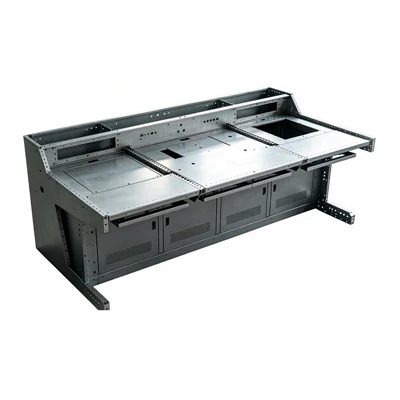
At our company, we don’t just sell sheet metal fabrication machinery—we give our clients the tools and training to get the most out of every machine they own. If you’re looking to improve your bend accuracy, or need help calibrating your existing equipment, get in touch with our team to discuss your specific needs. We offer on-site training, machine optimization services, and custom program setup to help your team reduce scrap and increase productivity. Whether you’re a small operation or a large facility, we can help you streamline your process and get the accurate bends you need to grow your business.
Sheet Metal Enclosure References:
- Lamb, J. (2021). Sheet Metal Forming: Technology and Applications (2nd ed.). Industrial Press.
- European Sheet Metal Association. (2022). Best Practices for Press Brake Operation and Maintenance. ESMA Technical Report Series.
- Wang, L., & Li, M. (2020). "Factors Affecting Bend Accuracy in CNC Press Brake Operations." Journal of Manufacturing Processes, vol. 56, pp. 789–798.
- American Society of Mechanical Engineers. (2019). ANSI B11.18: Safety Standards for Press Brakes. ASME International.
- Smith, A. (2023). "Reducing Springback in Sheet Metal Bending: A Practical Guide for Fabricators." Fabricator Magazine, vol. 45, no. 3, pp. 44–49.
Hefei Excellent Intelligent Technology Co., Ltd.
As one of the most professional sheet metal fabrication machinery manufacturers in China, we’re featured by quality products and good service. Please rest assured to wholesale bulk customized sheet metal fabrication machinery made in China here from our factory. Also, pricelist is available.
Address: No.3 Jingyi Road, Douzhen Industrial Park, Gangji Town, Changfeng County, Hefei City, Anhui Province
E-mail: 1637201948@qq.com
WebSite: https://www.cnakst.com/
