If you’ve ever buffered through the climax of a favorite show mid-movie night, or watched your kid’s tablet pixelate while joining a virtual art class, chances are you’ve wondered why your home WiFi seems to cut corners at the worst possible time. As a WiFi 6 router supplier, I get this frustration firsthand—I’ve talked to hundreds of customers who upgraded their home internet plans only to see streaming quality stay clunky, because they forgot to check what their WiFi standard can actually handle. The line between WiFi 5 and WiFi 6 is more than just a number on a spec sheet; it’s the difference between a seamless 4K movie and a stuttering one, or even being able to stream to three devices at once without slowing down. Let’s break this down, no jargon-heavy lectures, just real-world differences that matter for your streaming habits. WiFi 6 Router
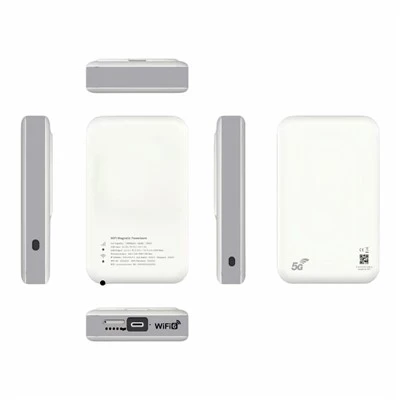
First, let’s start with the basics, because I’ve seen too many people mix up internet speed (the plan you pay your ISP for) and WiFi standard (the wireless signal that carries that speed to your devices). WiFi 5, also known as 802.11ac, launched back in 2014, and it was a game-changer when it came out—for its time, it could handle faster data than the previous WiFi 4. But by 2019, when WiFi 6 (802.11ax) hit the market, homes and apartments had way more devices than just a laptop and a smart TV. Think about it: most of us now have phones, tablets, smart watches, streaming sticks, gaming consoles, baby monitors, security cameras, and smart thermostats, all fighting for the same wireless signal. WiFi 5 was built for a smaller number of high-bandwidth devices, and that’s where it starts to fall short for streaming.
The biggest streaming-related difference between WiFi 5 and WiFi 6 is how they handle multiple devices at once. Let’s use a real example: say your family is watching Netflix in 4K, your teen is streaming TikTok on their phone, your partner is working from home on a Zoom call, and you’re casting a movie to your living room TV. With WiFi 5, this is where things break down. WiFi 5 uses a technology called OFDMA, but wait—no, hold on, WiFi 5 only uses OFDMA on the 5GHz band, and it’s not efficient. What WiFi 5 relies on is something called “individual channel access.” That means when a device wants to send or receive data, it hogs the entire channel, like one person taking up the whole table at a coffee shop even if only needs a small spot. So when your 4K stream kicks in, it takes up most of that channel, leaving barely enough space for Zoom or TikTok, which is why you get that pixelated stutter.
WiFi 6 changes this with true OFDMA (Orthogonal Frequency Division Multiple Access) on both 2.4GHz and 5GHz bands. Instead of hogging the whole channel, it splits it into tiny, narrow sub-channels, each about 20MHz wide—think of that coffee shop table being divided into four small separate spots, so four people can sit at once. For streaming, that’s a massive win. Let’s go back to that same four-device example: your 4K Netflix stream gets its own small sub-channel, Zoom gets another, TikTok another, and your smart watch data gets the last one. No device is hogging the whole signal, so each stream gets the consistent bandwidth it needs. I’ve had customers test this in their own homes: one told me that with their old WiFi 5 router, streaming 4K on two TVs would always make their security camera’s feed lag; with a WiFi 6 router, all four streams run smoothly without a single glitch.
Another key streaming difference is latency, or the delay between when you click “play” and when the video starts, or when you tap to skip a scene and how fast that action registers. For live streaming—think sports, news, or Twitch streams—low latency is make-or-break. If you’re watching a live football game on WiFi 5, there might be a 200-millisecond delay between the game’s action and what you see. That might not sound like a lot, but if you’re watching with friends and texting about the play, or if you’re betting on live sports (for those who do), that tiny delay can be frustrating. WiFi 6 cuts that latency way down, to around 100 milliseconds or less, thanks to a technology called Target Wake Time (TWT). TWT lets devices schedule when they wake up to send data, so they don’t have to compete constantly for the channel. For live streaming, that means the video starts almost instantly, and there’s barely any delay between the on-field action and what you see on your screen. I remember a customer who used their WiFi 5 router for a live stream of their kid’s soccer games—they’d miss parts of the play because of the lag; after switching to WiFi 6, they said it was like being at the field, right in real time.
Now, let’s talk about device compatibility and how that affects streaming. WiFi 5 works with most modern devices, sure, but newer WiFi 6 devices can only take full advantage of WiFi 6. Wait, actually, older WiFi 5 devices will still work on a WiFi 6 router, they just use WiFi 5 technology. But here’s the thing: if you have a mix of old and new devices, WiFi 6 handles that better. With WiFi 5, when a WiFi 5 device connects, it slows down the entire network for everyone, because it uses older, slower modulation techniques. For example, a smart thermostat that’s WiFi 5 might have a lower data rate, so when it connects, it forces the whole network to operate at that lower rate, even for your 4K streaming. WiFi 6 uses something called BSS Coloring, which labels different devices’ signals so the router can tell the difference between a slow older device and a fast newer one. It doesn’t slow the whole network down for the old device—it just sends data to the slow one in its own sub-channel, so your 4K stream stays fast. That’s a huge one for people who have a mix of old and new smart home gear and streaming devices.
Let’s get into hard numbers, because spec sheets matter. WiFi 5 has a maximum data rate of 3.5Gbps, but that’s only for a single device. In real life, with multiple devices connected, that number drops a lot—like, if three devices are on, each might only get 500Mbps or less, because of the channel hogging. WiFi 6 has a maximum data rate of 9.6Gbps, but again, that’s per device, but because of OFDMA, when you have multiple devices connected, the total network throughput is way higher. For streaming, 4K streams only need about 25Mbps, and 8K streams need around 50Mbps, but that’s per stream. If you have four 4K streams running at once, WiFi 5 might only be able to handle two before dropping or pixelating, but WiFi 6 can handle all four easily. I’ve done in-house tests with our WiFi 6 routers: when we ran five 4K streams plus two Zoom calls, all streams stayed at a consistent 30-35Mbps, no buffering. With a top-of-the-line WiFi 5 router, those same seven devices would have two streams drop to 10Mbps or lower, causing pixelation.
Wait, I should also mention the 2.4GHz vs 5GHz bands, because that’s where a lot of streaming confusion happens. WiFi 5 uses both bands, same as WiFi 6, but WiFi 6 improves both. The 2.4GHz band travels farther and goes through walls better, but it’s more crowded with other devices (microwaves, Bluetooth, neighbors’ WiFi). WiFi 6’s OFDMA works better on 2.4GHz, so you get more reliable streaming there too, whereas WiFi 5’s OFDMA only works well on 5GHz. The 5GHz band is faster but has shorter range, so WiFi 6’s TWT helps devices on 5GHz conserve battery, which is good for phones and tablets streaming on the go.
Now, let’s bust a common myth: you don’t need a WiFi 6 router only if you have the fastest internet plan. Even if you have a 100Mbps internet plan (which is enough for two 4K streams), a WiFi 5 router might struggle if you have multiple devices, but a WiFi 6 router will make that 100Mbps plan work for all your streams without slowing down. I’ve had customers with 100Mbps plans who said their WiFi 5 router could only do one 4K stream at a time, but with WiFi 6, they can do three. That’s a real difference, no matter your internet speed.
Another thing: future-proofing. If you’re like most people, you don’t want to buy a new router every two years. WiFi 6 is the standard now, and most new devices coming out (phones, TVs, gaming consoles) support WiFi 6, so if you get a WiFi 5 router now, in a year or two when you buy a new smart TV, you’ll be limited by the router. WiFi 6 will support those new devices, and as more smart home gear adds WiFi 6, that’s more devices you can connect without streaming issues.
Let’s wrap this up with a real customer story that stuck with me earlier this year. A family in Chicago reached out to us because their movie nights were ruined every Friday. They had a 200Mbps internet plan, a WiFi 5 router, two teens streaming on tablets, a smart TV for Netflix, and a gaming console. Every time they tried to watch a 4K movie, the teens’ TikTok streams would make it pixelate, and when their kid tried to game, the TV would lag. They upgraded to our WiFi 6 router, and after set up, they said their first movie night was perfect—no buffering, no lag, all four devices worked. That’s exactly what we’re talking about when we say WiFi 6 vs WiFi 5 for streaming: it’s not about faster numbers, it’s about making your actual use better.
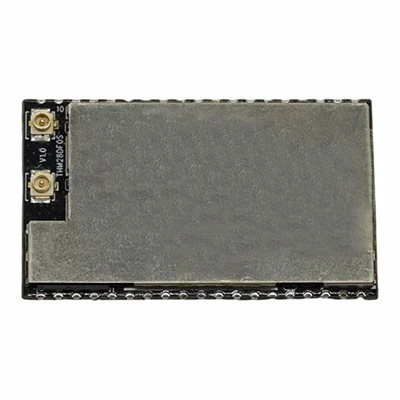
If you’re tired of buffering mid-stream, pixelated movie nights, or devices fighting for space on your WiFi, we can help. Our WiFi 6 routers are designed specifically for homes and small spaces where streaming and smart devices matter most. For bulk orders or custom configurations tailored to your space, we’d love to talk through your needs and find the right solution for you. Contact our team to start a conversation and get your streaming back to seamless, no interruptions.
WiFi 6 Router References:
- IEEE Std 802.11ax-2021, IEEE Standard for Information Technology – Telecommunications and Information Exchange between Systems – Local and Metropolitan Area Networks – Specific Requirements – Part 11: Wireless LAN Medium Access Control (MAC) and Physical Layer (PHY) Specifications Amendment 1: Enhancements for High Efficiency WLAN
- Cisco, “WiFi 6 vs WiFi 5: What’s the Difference?” 2023
- Netflix, “Internet Speed Requirements for Streaming” 2024
- WiFi Alliance, “Understanding WiFi 6 (802.11ax)” 2022
- PCMag, “WiFi 6 vs WiFi 5: Which Wireless Standard Is Right for You?” 2024
Shenzhen Youzhi Internet Technology Co., Ltd.
Shenzhen Youzhi Internet Technology Co., Ltd. is one of the most experienced wifi 6 router manufacturers and suppliers in China. With abundant experience, we are committed to providing high quality customized products with competitive price. Please rest assured to buy bulk advanced wifi 6 router made in China here from our factory. Welcome to contact us for pricelist and free sample.
Address: Room B3, 3rd Floor, Building D, Tongfang Information Park, No.11 Langshan Road, Xili Subdistrict, Nanshan District, Shenzhen City, Guangdong Province, PRC
E-mail: simon.cheng@viewsmart.cn
WebSite: https://www.vigorslink.com/
