If you’ve ever stood in your garage, kitchen, or workshop, staring at a wall outlet with a battery charger plugged in and wondering, “Should I unplug my battery charger when not in use?” — you’re not alone. As a battery charger supplier who’s worked with electricians, repair techs, and everyday users for over a decade, this question comes up at least twice a week in my inbox. It’s not just a random question, either; it touches on everything from energy bills to battery lifespan, and even small safety risks that many people overlook. Let’s break this down with the facts, because when it comes to powering devices we rely on, there’s no one-size-fits-all answer — but there are clear rules that make sense for your wallet, your gear, and your peace of mind. Battery Charger
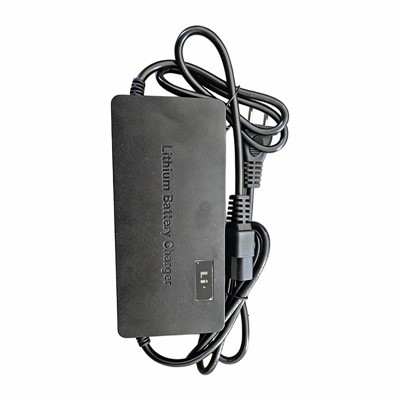
First, let’s start with what happens when a charger is plugged in but not actively charging a battery. A lot of people assume that if the charger’s light isn’t on, it’s not using any power — that’s a myth. Most modern battery chargers are “plug-in” devices, meaning they draw a small amount of power whenever they’re connected to an outlet, even when they’re not charging. This is called “vampire power” or standby power, and it’s a bigger drain than you might think. I’ve had customers tell me they leave their lawn mower charger, power tool charger, and phone charger all plugged in, and their energy bill jumps $15-$20 a month just from those idle devices. Multiply that over a year, and that’s enough to buy a new set of replacement batteries for your power tools, or a few months of electric bill credits.
But wait — not all chargers are the same. As a supplier, we design different types for different use cases, and their standby power draw varies a lot. Basic trickle chargers, which are often used for car batteries or deep-cycle RV batteries, have a small transformer that runs constantly when plugged in. A 12V trickle charger might draw 0.5 to 1 watt of power when idle. That might sound tiny, but over 12 months, that’s around 8.76 kWh of electricity — enough to run a small fridge for almost 9 hours, or power a laptop for 50 hours. Smart chargers, which have microprocessors that detect when a battery is fully charged, usually cut off most of their internal circuits once charging is complete, but they still draw a small amount of power to monitor for battery voltage drops. Those draw around 0.1 to 0.3 watts, so the standby drain is much smaller — maybe 2.6 kWh a year. That’s not nothing, but it’s a fraction of what a basic trickle charger uses.
Beyond energy costs, there’s the impact on your batteries. Wait — if the charger isn’t charging, how does it affect the battery it’s connected to? If you leave a charger plugged into a dead or partially charged battery, even a smart charger might periodically top off the battery if it drops below a certain voltage. That sounds like a good thing for a car battery that sits dormant all winter, right? But here’s the catch: over weeks or months, that constant trickle of top-up charge can actually degrade the battery’s cells, especially if the charger is older or not calibrated correctly. I’ve seen customers come in with car batteries that died after 2-3 years, not because they were old, but because they left the charger plugged in 24/7 all winter. The repetitive small charges cause sulfation — a buildup of lead sulfate crystals on the battery plates that reduces capacity and shortens lifespan. For deep-cycle batteries used in golf carts or solar systems, this effect is even more pronounced; those batteries are designed to be discharged, then recharged fully, not constantly topped off at partial states.
What about safety? This is a part of the conversation that’s rarely talked about, but it’s important. Even modern chargers have small internal components that can fail over time. The transformer, wiring, or internal fan (if the charger has one) can develop faults, especially if the charger is old or exposed to dust, moisture, or temperature fluctuations. A plugged-in, idle charger still has live electricity running through its internal circuits, so a faulty component can lead to overheating, and in rare cases, a small fire. This risk is low for high-quality chargers like the ones we supply — we build ours with thermal fuses and overcharge protection to prevent that — but it’s not zero. For chargers that are a few years old, or cheap off-brand models you bought online, that risk goes up significantly. I once had a customer bring in a charger that had melted its plastic casing after being plugged in for 6 months without charging a battery; it was a no-name model with no safety certifications, and it could have caused a lot more damage if it had been left next to flammable materials like cardboard or gasoline cans.
So, when should you definitely unplug your charger when not in use? Let’s outline clear scenarios where unplugging makes the most sense. First, for portable chargers you use regularly — like phone chargers, power tool chargers, or laptop chargers — if you’re not going to use it for more than a day, unplugging is an easy habit to build. The standby power is low, but the small safety risk, even for good chargers, is not worth taking. Second, for chargers that are not connected to a battery at all. If your charger is just plugged into the wall with no battery attached, that’s 100% unnecessary power draw, and no benefit whatsoever — so always unplug that. Third, for chargers used with smaller, more sensitive batteries. For example, lithium-ion batteries used in cameras, drones, or e-bikes. These batteries have built-in management systems, so leaving the charger plugged in after they’re full doesn’t do anything useful, and the constant small power draw from the charger can create minor voltage fluctuations that over time can wear down the battery’s internal circuits. Fourth, for chargers stored away for long periods — like a car charger you use only in the winter, or a lawn mower charger you don’t touch between April and October. Unplugging it when you put it away reduces power draw, and also prevents dust and moisture from getting into the charger’s internal parts while it’s stored.
But there are also times when you should NOT unplug your charger, at least not completely. If you’re using a smart charger for a vehicle battery that sits dormant for weeks or months — like a classic car you only drive on weekends, or an RV that’s stored for the winter — leaving a properly calibrated smart charger plugged in is actually better for the battery than unplugging it. Why? Because if a car battery goes completely dead, its plates can sulfate permanently, making it impossible to start the vehicle. A smart charger will monitor the battery’s voltage and send small top-up charges as needed to keep it at a healthy level, extending its lifespan. That said, you should only do this with a charger designed for long-term floating charge mode, and you should check the charger’s temperature and the battery’s condition every few weeks to make sure there’s no overheating or malfunction. Also, never leave a trickle charger doing this — as we talked about earlier, trickle chargers don’t have the smart monitoring, so they can overcharge the battery over time.
Another edge case: chargers built into devices. For example, some electric scooters or power banks have a built-in charger. If you’re charging the power bank, once it’s full, it’s fine to leave it plugged in for a few hours — most have automatic shutoff. But leaving it plugged in for days, or when it’s not charging at all, will still draw standby power and can stress the device’s internal charger circuit, especially in hot environments.
I get that building a habit of unplugging every charger you’re not using sounds tedious. We’re all busy, and it’s easy to forget. So here are a few simple tips to make it manageable, from someone who works with chargers every day. First, use power strips. Plug all your chargers into a single power strip with a switch, and flip the switch off when you’re done. That way, you don’t have to reach behind every outlet — one flip turns off all idle chargers. Second, label your most-used chargers so you remember which ones are plugged in. I have a white board in my workshop where I write down which chargers are connected to batteries, and which are just plugged into the wall for idle periods. Third, invest in high-quality chargers. As a supplier, I’m not just selling a product — I’m telling you that a $20 smart charger with UL certification will have far lower standby power draw and much better safety features than a $10 off-brand trickle charger. Even if it costs a bit more upfront, you’ll save money on energy bills and replacement batteries over time, and you’ll have peace of mind.
Let’s also clear up a common misconception: some people think that leaving a charger plugged in keeps it “ready” for use, so it’s better to plug it in all the time. But chargers don’t wear out faster from being unplugged — in fact, they last longer when they’re not exposed to constant power draw from the outlet. The biggest wear on a charger comes from when it’s in use, charging a battery, not when it’s idle. Unplugging it when not in use actually reduces the stress on its internal components, extending its overall lifespan.
I’ve seen this play out with my own customers. A few months ago, a guy came in with a 4-year-old car battery that wouldn’t hold a charge. He told me he left the smart charger plugged in 24/7 all winter to keep it topped up. We tested the battery and found significant sulfation on the plates — exactly what happens when a battery is constantly in a partial state of charge with regular top-ups. I recommended he unplug the charger when the battery is fully charged, and only plug it in when the battery drops below 12.2 volts. Six months later, he came back and told me that simple change had doubled his battery’s lifespan, and his energy bill was $12 lower each month because he wasn’t paying for that extra standby power. That’s the kind of small change that makes a big difference.
Another example: a parent who bought a set of power tool chargers for their teen who does woodworking. They were leaving all four chargers plugged in in their garage, and their electric bill was $25 higher than their neighbor’s, who had the same-sized house. After switching to a power strip and unplugging the chargers when not in use, their bill dropped right down to the expected amount. The teen also told me that their batteries were lasting longer, because they weren’t being constantly topped off when fully charged.
So, to circle back to the original question: “Should I unplug my battery charger when not in use?” The short answer is: it depends, but for most cases, yes. If the charger is not connected to a battery at all, unplug it. If it’s a portable charger you use regularly, and you won’t need it for more than a day, unplug it. If it’s a smart charger for a dormant vehicle battery, and you’re using it to maintain the battery’s health, keep it plugged in — but only if it’s a smart charger designed for floating charge. If it’s a cheap, uncertified charger, err on the side of unplugging it, no matter the use case.
At the end of the day, this isn’t just about saving a few dollars on electricity — it’s about being responsible with the devices we rely on, and making small choices that help your gear last longer and your home stay safe. If you’re unsure which charger is right for your needs, or you have questions about maintaining your batteries, feel free to reach out for a consultation. We’re here to help you find the right solution for your setup, whether you’re a hobbyist with a few power tools or a business owner with a fleet of electric vehicles.
References
U.S. Department of Energy. Standby Power: The Hidden Energy Vampires.
Battery University. Effects of Trickle Charging on Lead-Acid Batteries.
Consumer Product Safety Commission. Electrical Hazards from Unused Charging Devices.
International Electrotechnical Commission. Safety Standards for Portable Battery Chargers.
Battery Charger If you’re looking for high-quality, reliable battery chargers tailored to your needs, or you have questions about maintaining your batteries safely and efficiently, don’t hesitate to connect with our team to discuss your requirements.
Tianchang Hengze Technology Co., Ltd.
With abundant experience, we are one of the most professional battery charger manufacturers and suppliers in China. Please rest assured to buy bulk battery charger made in China here from our factory. If you have any enquiry about quotation, please feel free to email us.
Address: No. 8 Sanxing Road, Qinlan Town Industrial Park, Tianchang City, Chuzhou City, Anhui Province, P.R. China
E-mail: 604894957@qq.com
WebSite: https://www.hengzebc.com/
