Hey there! I’m an impeller supplier, and today I wanna chat about how impellers affect fluid flow. It’s a super interesting topic that has a big impact on a whole bunch of industries, from water treatment to pumping systems and even in some high – tech equipment. Impeller

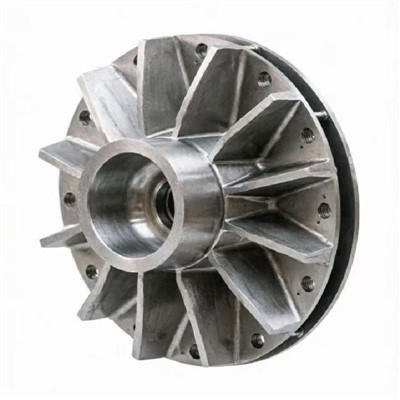
Let’s start with the basics. An impeller is a rotating component with blades that’s used to increase the pressure and flow of a fluid. You can think of it like a little engines for moving liquids or gases around. When the impeller spins, it creates a force that pushes the fluid through a system.
One of the key ways an impeller affects fluid flow is by changing the fluid’s velocity. As the impeller rotates, it grabs the fluid and flings it outwards. This increases the speed of the fluid, kind of like how a pitcher throws a baseball. The faster the impeller spins, the higher the velocity of the fluid. This is crucial in applications where you need to move a large volume of fluid quickly, like in a water supply system for a big city.
But it’s not just about speed. Impellers also play a major role in changing the pressure of the fluid. When the fluid is accelerated by the impeller, its kinetic energy increases. According to Bernoulli’s principle, as the kinetic energy goes up, the pressure of the fluid also changes. In a centrifugal impeller, for example, the fluid enters the center of the impeller and is then accelerated outwards towards the edges. This creates a high – pressure area at the outer part of the impeller. This increased pressure is what allows the fluid to be pushed through pipes, valves, and other components in a system.
The shape of the impeller blades is another important factor that affects fluid flow. There are different kinds of blade shapes, like radial, backward – curved, and forward – curved. Each shape has its own unique effect on the fluid.
Radial blades are straight and extend outwards from the center of the impeller. They’re great for generating high pressure, but they can be a bit less efficient when it comes to moving large volumes of fluid. That’s because the fluid flow can be a bit more turbulent with radial blades.
Backward – curved blades, on the other hand, curve in the opposite direction of the impeller’s rotation. These blades are known for their efficiency. They create a more streamlined flow of the fluid, which reduces energy losses due to turbulence. This makes them a popular choice for applications where energy efficiency is a top priority, like in HVAC systems.
Forward – curved blades curve in the same direction as the impeller’s rotation. They’re really good at moving large volumes of fluid at relatively low pressures. You’ll often find forward – curved impellers in things like fans for cooling systems.
The number of blades on an impeller also matters. More blades generally mean more contact with the fluid, which can lead to a more uniform flow. But having too many blades can also increase the resistance and cause the impeller to use more energy. So, it’s all about finding the right balance.
In addition to the design of the impeller itself, the operating conditions also affect how it influences fluid flow. The speed of the impeller rotation is a big one. As I mentioned earlier, a faster – spinning impeller will generally move the fluid faster and create more pressure. But there’s a limit to how fast an impeller can spin. If it spins too fast, it can cause cavitation.
Cavitation is a real problem in fluid systems. It happens when the pressure of the fluid drops below its vapor pressure, causing bubbles to form. When these bubbles collapse, they can create shock waves that damage the impeller and other parts of the system. So, it’s crucial to operate the impeller within a safe speed range to avoid cavitation.
The viscosity of the fluid is another important factor. Viscosity is a measure of how thick or sticky a fluid is. For example, honey is more viscous than water. When dealing with a more viscous fluid, the impeller has to work harder to move it. This means that the impeller design might need to be adjusted to handle the increased resistance. A different blade shape or a more powerful motor might be required for a viscous fluid.
When it comes to choosing the right impeller for a specific application, it’s not always easy. There are so many factors to consider, like the type of fluid, the required flow rate, and the pressure needed. That’s where our expertise as an impeller supplier comes in. We’ve got a whole team of experts who are really good at understanding these complexities and helping customers find the perfect impeller for their needs.
We’ve worked on projects in a wide range of industries. For example, in the chemical industry, where you often have to deal with corrosive fluids. We can provide impellers made from special materials that can withstand the harsh chemicals. In the food and beverage industry, where hygiene is a big deal, we offer impellers that are easy to clean and meet all the necessary safety standards.
So, if you’re in the market for an impeller, or if you’re just curious about how they can improve your fluid – handling system, don’t hesitate to reach out. We’re here to answer your questions, provide you with detailed product information, and help you through the whole procurement process. Whether you’re working on a small – scale project or a large industrial installation, we’ve got the knowledge and the products to meet your requirements.
Let’s work together to make sure your fluid – flow system runs as smoothly and efficiently as possible. Contact us today to start the conversation about your impeller needs.
Valve Castings References
- "Fluid Mechanics" by Frank M. White
- "Centrifugal Pumps: Design, Operation, and Maintenance" by Michael J. McDonald
- "Pump Handbook" by Igor J. Karassik
Shandong Shunye Stainless Steel Co., Ltd.
Shandong Shunye Stainless Steel Co., Ltd. is one of the most professional impeller manufacturers and suppliers in China, also supports customized service. Welcome to buy bulk cheap impeller made in China here and get quotation from our factory. For price consultation, contact us.
Address: Shandong Province, Binzhou City, Wudi County, Liubao Town, Zhangdong Road, Duliucun Village
E-mail: sales@wdshunye.com
WebSite: https://www.shunyecasting.com/
