If you’ve ever worked in water treatment or even just followed the news about drought-stricken regions, you know desalination isn’t magic—it’s hard, technical work. And when you’re running equipment that pulls salt and contaminants out of seawater or brackish water, safety isn’t just a box to check; it’s the whole game. As a desalination equipment supplier, I’ve spent years walking our techs through every safety feature we build into our systems, because cutting corners here isn’t an option. Let’s break down what actually keeps our gear (and the people running it) safe, no stuffy engineering jargon required. Desalination Equipment

First off, let’s talk about pressure. Most desalination systems, especially reverse osmosis (RO) ones, run at insane pressures—like 800 to 1,200 psi for seawater RO. That’s enough pressure to injure someone badly if a pipe bursts, right? So we built in pressure relief valves that are basically the system’s “panic button.” If pressure spikes for any reason—say, a filter clogs and traps extra fluid—those valves pop open automatically to bleed off excess pressure. We don’t just stick one valve on there, either; we use dual redundant valves. That way, if one fails, the other is there to stop a blowout. I’ve seen a system where a single valve almost didn’t work, so we switched to dual ones across all our gear. It’s a small change that’s saved our clients from costly messes and even worse injuries.
Another big one is leak detection. When you’re working with saltwater, fresh water, and sometimes chemicals, leaks can sneak up on you fast. Seawater is corrosive, so a small pinhole in a pipe can turn into a big leak before you notice. Fresh water might flood a control room, and chemicals like antiscalants or cleaning agents can be toxic if they spill. So we install float sensors in all the low areas—pump rooms, pipe trenches, storage tanks. If water levels get too high, the sensors trigger an alarm on the control panel and even shut down parts of the system to prevent damage. For chemical lines, we put gas detectors (for fumes from concentrated cleaning chemicals) and fluid sensors that can pick up even a tiny spill. Last year, a client’s tech told us our leak sensors caught a spill before anyone even smelled it—they were able to clean it up without any downtime. That’s the kind of safety we care about.
Let’s not forget about control system safety. Most modern desalination systems run on automated control panels, which are super efficient but can be risky if they glitch. We programmed our control systems with fail-safes at every step. For example, if the power goes out unexpectedly, the system doesn’t just shut down mid-cycle and leave pressure built up in the RO membranes— it has a backup battery that triggers a slow, safe depressurization. No one wants to open a panel after a power outage and get sprayed with high-pressure water. Also, we built in interlocks that stop the system if a door to a pump room is opened. You can’t reach in to adjust a part while the pump is running; the system locks up until the door is closed and secured. It sounds like a hassle, but it’s prevented so many accidental injuries from moving pump parts.
Chemicals are another big safety headache in desalination. We use chemicals for cleaning membranes, preventing scale buildup, and disinfecting the water before it’s pumped out. But those chemicals—like sulfuric acid, sodium hypochlorite, or caustic soda—are corrosive and can burn skin or eyes. So we built several safety features to handle them. First, we use enclosed chemical storage tanks with double walls. If the inner tank springs a leak, the outer one catches it, and a sensor alerts the operator before any chemicals hit the ground or water. The chemical feed lines are made of corrosion-resistant materials, like HDPE or fiberglass, so they don’t crack and spill. Also, the chemical injection pumps have pressure sensors that stop pumping if the line gets blocked, which can cause chemicals to back up and leak. We also require our clients to have personal protective equipment (PPE) stations right next to the chemical handling areas, but that’s more operator safety—our job is to make the system itself as safe as possible.
What about the membranes themselves? RO membranes are fragile and expensive, but they can also be a safety risk if not handled right. High pressure can damage them, and if they’re not properly maintained, they can release contaminants. So we put in membrane pressure sensors that track the pressure on each individual membrane element. If one membrane is under too much or too little pressure, the system alerts the operator and adjusts the flow before the membrane is ruined or pressure builds up. Also, we have a cleaning cycle that’s fully automated—no one has to manually adjust chemicals or pressure during cleaning, which cuts down on human error. The cleaning cycle runs at a safe, controlled rate, so there’s no chance of a chemical splash from an unregulated mix.
Electrical safety is huge too. Desalination systems use a lot of power, which means big electrical panels and high-voltage wires. We’ve all heard stories about electrical fires or shocks from poorly installed equipment, so we designed our systems with arc fault protection that shuts down power if there’s a spark or fault in the wiring. The electrical panels are sealed with locking covers so only trained techs can open them, and we use ground fault circuit interrupters (GFCIs) in all outdoor and wet areas. No one wants to get a shock while standing in a damp pump room. Also, we include surge protectors to shield the control system from power spikes, which can not only damage the system but also cause it to act unpredictably.
Wait, let’s not forget about emergency shutdown (ESD) systems. Every desalination system needs an ESD button that anyone can press in an emergency—like if someone sees a leak or a pump malfunctioning. We placed our ESD buttons in every key area: control rooms, pump rooms, chemical storage areas, even outside the system’s main building. They’re bright red and labeled so no one can miss them. And when you press that button, it doesn’t just shut off the system—it triggers that slow depressurization I talked about earlier, shuts off all chemical feeds, and locks all moving parts. It’s a failsafe for when something goes wrong fast.
I get it—some of our clients might look at these features and think, “That’s extra cost.” But here’s the thing: downtime from an injury, a leak, or a system failure is way more expensive than building these safety features in from the start. We’ve had clients who skipped adding dual pressure valves and ended up with a burst pipe that shut their system down for three days—costing them hundreds of thousands of dollars in lost production. Our systems are built to keep people safe and keep the water flowing, which is why so many regional water authorities and industrial plants work with us.
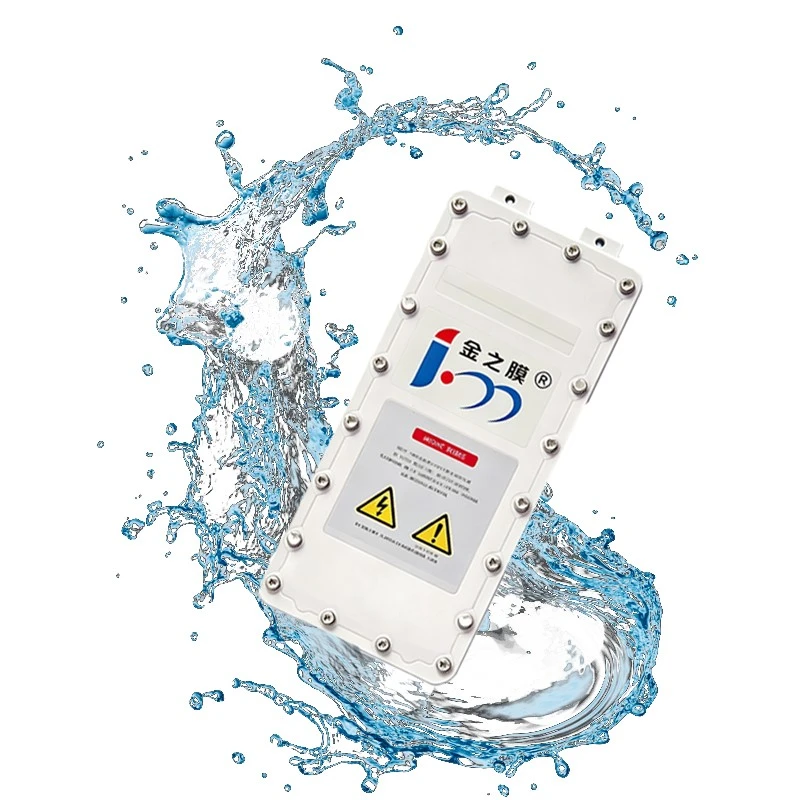
If you’re in the market for desalination equipment and want to talk more about how our safety features work for your specific needs—whether you’re running a small brackish water system for a remote community or a big seawater plant for an industrial park—feel free to reach out. We don’t do hard sells; we sit down with you, walk through your site, and make sure the system we build is safe, reliable, and fits your budget.
Membrane Modules References
- American Water Works Association. (2021). Water Treatment Safety: A Guide for Operators. AWWA Press.
- U.S. Department of the Interior. (2020). Desalination System Safety Protocols for Coastal and Inland Applications. Bureau of Reclamation.
- World Health Organization. (2019). Safety Considerations for Desalination Plants in Water Scarce Regions. WHO Press.
- Global Water Intelligence. (2022). Key Safety Innovations in Modern Desalination Equipment. GWI Reports.
Shandong Jinzhimo Environmental Protection Technology Co., Ltd.
As one of the most professional desalination equipment manufacturers and suppliers in China, we also support customized service. Please feel free to wholesale advanced desalination equipment in stock here from our factory. For pricelist, contact us now.
Address: Room 101, Building 9, Shangri-La, Jinlong Road, Zhaoyuan City, Yantai City, Shandong Province
E-mail: zhanglina0778@126.com
WebSite: https://www.sdjzmhb.com/
