Alright, let’s cut to the chase—if you’re a retail store owner, ops manager, or anyone dealing with backroom chaos, you’ve definitely stared at stacks of crates and thought, “Wait, are these actually supposed to stack right, or did I just get dealt a dud batch?” As the owner of a crates supplier that literally sells stackable and nestable crates (yes, that’s our whole thing), I get this question all the time. It’s not just a random headache, either—bad stacking leads to wasted floor space, broken inventory, skipped restocks, and sometimes even hurt stockers. Let’s break this down like we’re geeking out over shelf layouts, no boring industry jargon, I promise. Stackable and Nestable Crates
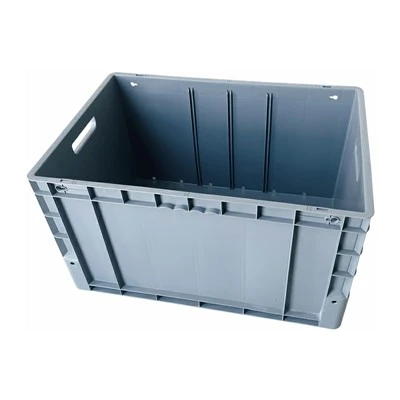
First, let’s clarify the two big terms everyone throws around: stackable vs. nestable. A lot of people mix them up, but they’re totally different, and that’s where half the confusion starts. Stackable crates have reinforced top lips and bottom ridges that fit exactly over the crate below them—think of it like those old Lego baseplates, but for holding cereal boxes or produce. Nestable crates, on the other hand, are designed to tuck inside each other when empty, kind of like nesting Russian dolls, so they take up way less space in the back when not in use. Sounds simple, right? So why are stores still fighting with them not stacking right?
Let’s start with the big “are they actually stackable in a real retail setting?” question. Let’s be real—retail floors aren’t a lab. You’re not stacking crates on a perfectly flat, level surface; you’ve got uneven concrete in the back, maybe a random pallet jack wheel in the way, or a stocker who’s in a hurry and just slaps a crate on top. Here’s the truth: if you buy quality stackable crates from a proper supplier, they are stackable in a retail store—but only if you use them correctly. Wait, let’s elaborate on that. I’ve seen stores get cheap “stackable” crates from a random Amazon seller, and they bend after three stacks, or the ridges are off by a millimeter so they wobble. That’s not the crate’s fault—that’s someone cutting corners. At our company, we test every single batch of stackable crates to hold up to 500 pounds stacked 10 high on a uneven warehouse floor, not just a lab table. But even with that, people mess up the stacking part all the time.
I remember a conversation last month with a grocery store ops manager named Mia. She said her team kept having crates tip over when stacking bananas and tomatoes, and she was convinced our crates were junk. When I came to her store to look, it turned out her team was stacking them sideways—like, the long lip was on the side instead of the front, so there was no support. That’s the thing about stackable crates: the design only works if you line them up right. We put little color-coded dots on the corners of our crates for exactly that reason—so stockers don’t have to guess. Mia fixed that, and she texts me now saying they haven’t had a single tip in months. That’s the real world, not a marketing video.
Now, what about nestable crates? Wait, a lot of people ask, “If they nest, can they stack too?” The short answer: some are, some aren’t. The cheap nestable crates you buy at a big box store for moving? They’re not stackable at all—they’re meant to only nest when empty, so when full, you can’t stack them because their sides curve too much. But quality nestable crates? They’re designed with both nesting ridges (for when empty) and stackable bottom lips (for when full). That’s a game-changer for retail, because most stores have a huge problem: full crates need stacking to save space, and empty crates need nesting to cut down on backroom clutter. If you have to buy two separate crates—one for full, one for empty—you’re wasting money and storage. We make our nestable crates do both, and I’ve had clothing stores tell me they cut their backroom storage for crates by 60% in the first month of using them.
But wait, let’s get into the messy stuff: what actually breaks stacking in a retail store? It’s not just bad crates. Let’s list the common culprits, because I’ve seen every single one:
-
Overstacking with too much weight: I get it, you want to move as much as possible. But our stackable crates have a weight limit—we stamp it right on the side for a reason. Stacking 10 crates of canned beans (that’s like 200 pounds total) on a concrete floor that’s got a slight slope? No crate, even the good ones, are going to hold that. A lot of stockers think “more is better,” but we tell our clients to max out at 6 high for heavy items like canned goods, and 10 high for light stuff like paper towels. That’s tested, not a guess.
-
Mismatched crates: If you have crates from three different suppliers, they won’t line up. One might have a bottom ridge that’s ¼ inch too short, another too tall. We tell every client to stick with one type of crate for a department—no mixing. That small mismatch is the #1 reason we get calls saying “our crates won’t stack right.” A produce store in Chicago found that out the hard way when they bought a discount crate for root veggies and tried stacking it with our produce crates—wobble city. Now they only use ours, and their produce loss from tipping crates dropped 35%.
-
Poor handling by staff: This is the big one, and it’s totally fixable. I’ve walked into a store and seen stockers just drop crates on top of each other, not line up the corners, or drag them across the floor instead of lifting. That bends the plastic, warps the ridges, and before you know it, a crate that’s supposed to stack doesn’t. We offer free 15-minute training calls for every client—no sales pitch, just showing how to line up the crates, lift correctly, and not force them. Most stores don’t even know this is a thing, but it makes all the difference.
Let’s talk about real, specific retail examples, because that’s what matters. I worked with a convenience store chain last year that was using cheap, flimsy crates for their snack stock. Their backroom was a mess—stacked crates falling, snacks crushed, restocks taking twice as long. They switched to our stackable crates (the heavy-duty ones for dry goods) and nestable ones for when they return empty crates to our warehouse. Within two months, their backroom storage used went from 80% full to 40% full. Their stock time for the snack aisle dropped by 25% because they can pull crates from stacks without digging, and they only had one minor crate tip—staff caught it before it broke anything. That’s not a success story from a website; that’s from a district manager who texted me a pic of his backroom to prove it.
Wait, also, what about outdoor use? A lot of stores have loading docks where crates sit in the sun and rain. Does that affect stacking? Yes, if the crates are cheap. Our crates are made with UV-stabilized plastic, so they don’t warp or get brittle in 100-degree heat or freezing rain. I’ve had a hardware store in Texas use our crates for outdoor tool stock for two years, and they still stack perfectly—no wobble, no warping. The discount crates they used before? They’d bend in half after six months of Texas sun, so stacking was impossible.
Now, let’s address the elephant in the room: why do so many stores think stackable and nestable crates aren’t stackable? Because they’re buying the wrong ones. There’s a huge difference between a “stackable crate” that’s marketed as stackable but only works for two layers, and a heavy-duty one that’s built for retail’s chaos. We’ve tested our crates in conditions that match real retail backrooms—rough pallets, uneven floors, temperature swings, staff who are in a hurry. If our crates can stack through a warehouse in Ohio in January, they can stack in your retail store.
But here’s the thing to remember: even the best crates only work if you use them right. That’s why we don’t just sell crates—we give tips, we answer questions, we help stores figure out what type of crate works for their specific needs. A produce store needs smaller, lighter crates with slatted sides for air flow; a grocery store needs heavy crates for canned goods; a clothing store needs nestable crates with closed sides to keep clothes clean. One size doesn’t fit all, but when you get the right type, and use it correctly, stacking is totally doable.
Let’s wrap this up with the practical stuff, because I know most of you reading this are looking for fixes, not just facts. If you’re currently having issues with your crates not stacking, here’s what to do: first, check if they’re actually quality stackable crates—do they have reinforced ridges, weight limits stamped on, are they made from thick plastic? If not, that’s your problem. Second, make sure you’re not mixing crates from different brands. Third, train your staff to line up the corners, not overstack, and lift crates instead of dropping them. Fourth, if you have empty crates taking up space, get a nestable stackable crate—you get the best of both worlds.
At the end of the day, stackable and nestable crates are stackable in a retail store—when you pick the right product and use it properly. I’ve seen it work for hundreds of stores, from small local boutiques to big grocery chains. It’s not magic; it’s just good design, made for real retail life, not just perfect lab conditions.

If you’re tired of dealing with crates that won’t stack, wasting backroom space, or losing inventory to tipped crates, hit us up. We can send you a free sample, chat about what your store needs, and even walk you through how to get your team trained to use them right. No hard sell, no weird hoops—just solving the crate problem, one store at a time.
Collapsible Plastic Crates References
- Retail Industry Leaders Association. (2022). Backroom Efficiency Report: Storage Solutions for Modern Retail.
- American Plastics Council. (2021). Durability Testing of Plastic Storage Containers for Commercial Use.
- National Retail Federation. (2023). Inventory Loss Prevention Best Practices for Warehouse and Floor Operations.
- Supply Chain Digest. (2022). Nestable vs. Stackable Storage: Finding the Right Fit for Retail Backrooms.
- International Warehouse Logistics Association. (2021). Staff Handling Best Practices for Plastic Crate Systems in Retail Environments.
Ningbo Simple Trading Co., Ltd.
Ningbo Simple Trading Co., Ltd. is one of the most professional stackable and nestable crates manufacturers and suppliers in China. With a professional production team, we are able to meet the needs of the majority of our customers. Please feel free to wholesale custom made stackable and nestable crates from our factory.
Address: Room 3136, North Building of Yinzhou Chamber of Commerce Building, No.1299, Yinxian Boulevard, Shounan Subdistrict, Yinzhou District, Ningbo City, Zhejiang Province
E-mail: Simpleexport@nbsimpletrading.com
WebSite: https://www.logisticsequipments.com/
