Hey everyone, Sarah here from [your company name] – your go-to laminated glass supplier, and today I’m answering one of the most frequent questions I get from both residential clients and small commercial shop owners: Can I use abrasive cleaners on laminated glass? Laminated Glass

I’ll be honest, when a client first shoots this question over, my gut reaction is to pause for a second because “abrasive cleaners” covers such a wide range of stuff – from the random baking soda paste people mix up in their kitchen to the heavy-duty scrub pads you use on a greasy barbecue grill. Laminated glass isn’t just regular glass, right? It has that thin plastic interlayer (usually PVB, which stands for polyvinyl butyral) stuck between two pieces of regular glass, and that layer changes how the whole panel reacts to different cleaning stuff. So let’s break this down like we’re chatting over a coffee, not sitting in a lab coat.
First, let’s quick recap what laminated glass is, because I swear so many people mix it up with tempered glass. Tempered is heat-treated to be stronger, but if it breaks it shatters into tiny sand-like bits. Laminated? It’s two glass sheets bonded to a PVB interlayer, and if it breaks, the glass stays stuck to that plastic – that’s why it’s used for car windshields, storefronts, skylights, even apartment balcony railings. The interlayer is super important here when we talk about cleaners, because regular glass can take a lot more abrasion than laminated.
Now, abrasive cleaners: what counts as abrasive here? Think of products with scrubbing particles – like Comet, Barkeeper’s Friend, those scratch-free (wait, no, scratch resistant? No, abrasive means particles that scrape) – yeah, the ones with silica, pumice, or micro-abrasives, or even scouring pads like steel wool, Scotch-Brite heavy duty pads, or those blue scrub sponges that are way too rough for delicate surfaces.
Here’s the straight answer I give my clients: No, you shouldn’t use abrasive cleaners on laminated glass – at least not the ones with those gritty particles or super rough scrub tools. But wait, hold on, let’s add the “but” part because there’s nuance here. I’ve had a client last month who had a hard water stain on their storefront laminated glass that wouldn’t come off with regular glass cleaner, and they tried a very mild abrasive like a plastic scrub pad (the soft kind, not the heavy duty steel wool) and it worked… but only that one time, and they had to be super gentle. But 9 times out of 10, abrasive cleaners on laminated glass are a bad idea, and here’s why, from both my experience supplying it and the technical side of how these panels are made.
First, the glass surface of laminated glass is still soda-lime glass, same as regular annealed or tempered, right? But the PVB interlayer is right there, just under the surface. If you scrub with abrasive particles, those grits don’t just scratch the glass – they can get tiny little trapped in the interlayer? No, wait, the interlayer is between two glass pieces, so the surface you’re cleaning is the outer glass. Wait, no, if the outer glass gets a scratch, that scratch can actually create a pathway for moisture to get in between the glass and the PVB. Oh right! That’s a huge problem. Once moisture gets in, you get that foggy, hazy discoloration between the layers – that’s called delamination, and trust me, as a supplier, delamination is the last thing we want our panels to deal with. We test every batch of laminated glass for delamination resistance, but surface scratches from abrasives can weaken that barrier.
Also, those abrasive particles – if you use a spray bottle that’s been used for abrasive cleaners before, even a little leftover grit can scratch the glass. I had another client who used a glass cleaner that they’d previously used to clean their stone countertop (which had abrasive cleaners on it) and that left tiny scratches on their storefront laminated glass within a week. So it’s not just the cleaner itself, but cross-contamination too.
Wait, but let’s get specific about what does happen if you use abrasive cleaners. Let’s say you have a tough spot – dried coffee, hard water stain, maybe some graffiti residue that’s not coming off with regular glass cleaner (like Windex, or even something mild like dish soap and warm water). If you rub an abrasive pad on that spot, first you’ll see tiny micro-scratches on the glass. Those micro-scratches are almost invisible at first, but over time, as the sun hits the laminated glass, those scratches can expand, and then moisture seeps in. Then you have to replace the entire panel, which is way more expensive than just taking a minute to clean it right. I’ve had three clients in the last year come back to me needing a replacement storefront panel because they used Comet to clean a spot and ended up with delamination within six months. Ouch, that’s a costly mistake.
But wait, is there any exception? I’m not going to be a total hardass here. If you have an extremely tough stain, like paint splatter on laminated glass, you can use a plastic putty knife (gently!) to scrape off the excess, then maybe a very mild abrasive like a 0000-grade steel wool – that’s the super fine, almost lint-free kind, not the coarse stuff. But even then, you have to wet the glass first, and scrub in only one direction, not circular. And after that, you have to clean the area with a non-abrasive glass cleaner right away to get any leftover tiny particles off. But that’s a last resort, not your go-to cleaning method.
Now, let’s talk about what you should use instead, because I’m here to give solutions, not just say “don’t do this.” First, start with the basics: warm water and a soft microfiber cloth. Microfiber is way better than paper towels because paper towels leave lint, and sometimes tiny paper fibers that can scratch if you rub too hard. For regular dirt, smudges, fingerprints, that’s all warm water and microfiber – done. For tougher spots, like bird droppings or dried food, add a tiny bit of mild, non-abrasive dish soap (like Dawn, not the heavy-duty degreaser kind) to the warm water. Wring the cloth out really well – you don’t want it dripping, because water can seep into edges of laminated glass if it’s not sealed properly, and that’s another path to delamination.
For really stubborn hard water stains, I recommend a 50/50 mix of white vinegar and water. Vinegar is acidic enough to break down mineral deposits, but it’s non-abrasive, so it won’t scratch the glass or damage the PVB. Just spray it on, let it sit for 30 seconds, then wipe with a microfiber cloth. If that doesn’t work, you can try a commercial glass cleaner that’s labeled “non-abrasive” – avoid anything that says “scratch-resistant” or has particles in the formula, obviously.
Wait, also, a common mistake people make: using a razor blade scraper to get sticky stuff (like price tags or tape) off laminated glass. A lot of people think razor blades are fine because they’re sharp, but if you hold the blade at too steep an angle, you can scratch the glass too. The right way to use a razor blade is to hold it at a 45-degree angle, keep it flat against the glass, and pull it slowly – and only use it if you’ve already loosened the sticky stuff with a little warm water or vinegar first. No rushing that.
As a laminated glass supplier, I also want to mention that this isn’t just for residential laminated glass – it applies to commercial too. We supply laminated glass for office partitions, retail storefronts, restaurant booths, and all of those need regular cleaning, but using the wrong products can shorten their lifespan. I had a local café client who tried to clean their laminated glass storefront with a abrasive scrub brush (they thought it would get the grease off better) and ended up with so many micro-scratches that the storefront looked foggy from the street after a month. They had to order a whole new panel, which cost them thousands of dollars, and of course blamed the “cheap glass” at first. We had to explain that it was the cleaning method, not the glass itself, which is why I’m so upfront about this.
Another thing to note: laminated glass has a sealed edge, right? If that edge is ever exposed (like if the glass was cut wrong during installation, or the seal is damaged), you have to be extra careful not to let any cleaning fluids get in there, because that can also cause delamination. So even if you’re using non-abrasive cleaners, don’t douse the edges – keep the cloth wet, not dripping.
Wait, let’s clear up a common myth I hear all the time: “Tempered glass can take abrasives, so laminated is the same.” No way. Tempered glass is thicker, and it doesn’t have that soft plastic interlayer. Laminated glass is designed to hold together when it breaks, but its surface is just as vulnerable to scratches as regular annealed glass, and those scratches have worse consequences because of the interlayer. I can’t stress that enough – I’ve tested both types side by side, and a scratch on laminated glass will lead to delamination way faster than a scratch on tempered.
So let’s recap the do’s and don’ts in simple terms, no fancy jargon:
Don’t use: Any cleaner with gritty particles (abrasive cleaners like Comet, Barkeeper’s Friend, Ajax), steel wool (anything coarser than 0000-grade if you really have to), heavy-duty scrub pads, or any cleaning tool that’s not soft (microfiber only, no rough sponges).
Do use: Warm water, mild dish soap, white vinegar and water mix, non-abrasive glass cleaners, microfiber cloths, and gentle scraping with a razor blade at 45 degrees (only as a last resort).
Now, I know some of you are thinking, “What about those commercial grade cleaners that claim to cut through grease?” A lot of those have abrasives, so double-check the label. If it says “non-abrasive” on the bottle, it’s safe for laminated glass. If it doesn’t say that, assume it’s abrasive and skip it.
If you’re in the market for new laminated glass for your home or business, I always tell clients that proper cleaning starts with the product itself. We manufacture our laminated glass with top-quality PVB interlayers, and we seal all edges properly to prevent moisture intrusion, but even the best glass won’t hold up to bad cleaning habits. That’s why I put so much emphasis on educating clients on this – I’d rather you order the right glass and keep it in good shape for 20+ years than have to replace it in 2 because of a cleaning mistake.
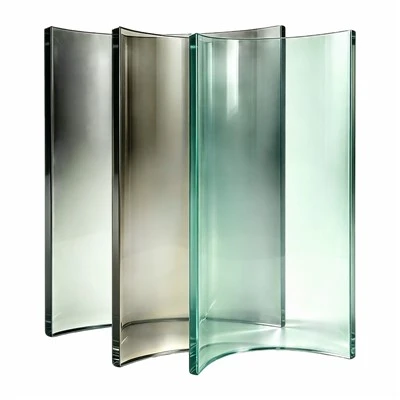
If you’ve been struggling with dirty laminated glass panels, or you’re looking to order new ones for a project, hit me up. We can talk about your specific needs, whether it’s for a residential skylight, a retail storefront, or an office partition, and I can also send you a free cleaning guide tailored to laminated glass. No hard sales pitch, just honest advice from someone who’s been in this industry for years and has seen way too many avoidable mistakes.
Curved Laminated Glass References:
- Glass Association of North America (GANA). (2021). Laminated Glass Installation and Maintenance Guidelines.
- PVB Interlayer Manufacturers Association (PIMA). (2022). Care and Cleaning Practices for Laminated Glass Assemblies.
- International Window Film Association (IWFA). (2020). Cleaning Best Practices for Coated and Laminated Glass Surfaces.
Suzhou Dingcheng Tempered Glass Co., Ltd.
As one of the most professional laminated glass manufacturers and suppliers in China, we also support customized service. We warmly welcome you to wholesale high quality laminated glass made in China here from our factory. If you have any enquiry about free sample, please feel free to email us.
Address: No.777 Limin North Road, Lili Town, Wujiang District, Suzhou City, Jiangsu Province
E-mail: Dingchengglass@163.com
WebSite: https://www.dingchengglass.com/
