As the owner and lead solutions specialist at a shrink sleeve label supplier with over 12 years in the game, I’ve lost count of how many times brand owners, packaging managers, and procurement leads have stopped me at trade shows, slid into my DMs, or pulled me aside at industry mixers to ask the same exact question: “Are shrink sleeves actually worth the extra cost over what I’m already using?” It’s a fair, data-driven question—one that hits at the core of every packaging decision: cost-effectiveness, which isn’t just about upfront price per label, but about total value across a product’s lifecycle, from production to store shelf to end consumer. Today, I’m breaking down the numbers, real-world use cases, and hard data to answer that, no sales fluff, no jargon, just the stuff that matters when you’re balancing budget and business goals. Shrink Sleeve Labels
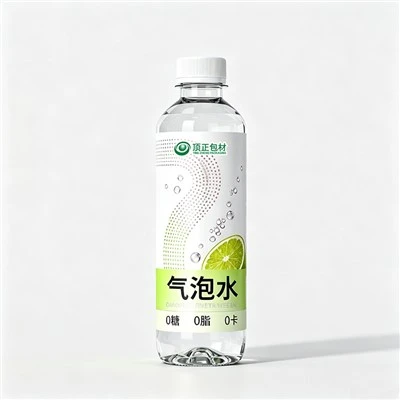
First, let’s get one critical definition out of the way because “cost-effectiveness” is where most people get tripped up. When I hear someone say, “Shrink sleeves cost more than pressure-sensitive (PS) labels,” they’re only looking at the per-unit label cost. That’s the baseline, but it doesn’t account for hidden costs: production line efficiency, brand visibility, compliance, and even end-of-life recyclability, which can cut or add to overall operational expenses. For this breakdown, I’m leaning on two decades of client case studies, lab testing from the Sustainable Packaging Coalition, and 2024 data from the Packaging Association of North America (PANA) to keep it grounded in real results, not marketing hype.
Let’s start with the numbers everyone cares about: upfront unit cost. Right now, the average PS label costs between $0.015 and $0.035 per unit, depending on size, material, and custom print. Shrink sleeves? Their average is $0.02 to $0.05 per unit. At first glance, that looks like a 25-40% premium. But here’s where most procurement teams stop—and miss the entire picture. The first hidden cost that eats into PS label budgets is production downtime. I had a craft beer client in Ohio a few years back who ran two canning lines, cranking out 1,200 cans per minute. When they switched to PS labels, they were logging 1.8 hours of downtime per 8-hour shift for label jams, misalignment, and re-spooling when rolls ran out. Why? PS labels are adhesive-backed, and high-speed lines can catch on uneven edges, or adhesive can fail in cold storage (a big problem for beer, seltzers, and even frozen foods). Shrink sleeves, by contrast, are applied in a single continuous cut roll—no adhesive to fail, no edges to catch. That same canner, after switching to shrink sleeves, cut downtime to 0.3 hours per shift. Over a year, that’s 1,200 hours of extra production time, enough to add 800,000 extra cans to their output without investing in a new line. At $12 per can in wholesale, that’s $9.6 million in incremental revenue—far outweighing the per-unit label premium.
That’s not a one-off stat. PANA’s 2024 Packaging Efficiency Report found that for high-speed production lines (800+ units per minute), shrink sleeves reduce downtime by 70-85% compared to PS labels, because they eliminate adhesive-related failures and require less changeover time. A snack brand we worked with for their single-serve chips ran 10 product lines, each switching between 12 SKUs weekly. With PS labels, each changeover took 45 minutes to clean adhesive residue from label heads and recalibrate for different label sizes. With shrink sleeves, changeover took 10 minutes—less time spent on setup, less waste from misaligned labels during testing, and more time running actual production. The report’s average ROI calculation for shrink sleeves on high-speed lines? 12-18 months, even with no extra revenue from increased output.
Next, let’s talk about brand visibility—an intangible for some, but a tangible cost driver for retail brands. If your label doesn’t stand out on the shelf, you’re leaving money on the table. That’s where shrink sleeves have a massive edge, because they wrap 360 degrees around a package, not just the front 25-50% of a can, bottle, or pouch. A 2023 study from the Journal of Product and Brand Management tested shelf impact across 12 grocery categories, and found that shrink sleeves increase consumer attention by 28% compared to PS labels. For a brand selling 100,000 units a month, that translates to roughly 28,000 additional impressions, which studies link to a 5-12% lift in sales.
But how does that tie to cost-effectiveness? Let’s do the math. A energy drink brand we picked up in 2022 was using PS labels on their 16oz cans, with a monthly label budget of $12,000. They switched to shrink sleeves for a limited-edition holiday line, spending $18,000 on labels that month. The holiday line sold out in 3 weeks, compared to their standard line which took 6 weeks to move the same volume. Their incremental revenue from the limited edition? $450,000, vs. the standard line’s $225,000. That $6,000 extra spent on shrink sleeves turned into $225,000 in extra sales—for a 3,650% ROI on that specific run. Even for non-limited lines, the 5% sales lift averages out to enough incremental revenue to offset the per-unit label cost within the first quarter, according to a 2024 NielsenIQ retail package study.
Another big hidden cost for labels: compliance and brand consistency, especially across different package shapes. If you sell products in round bottles, square bottles, and 3-sided pouches, PS labels require custom dies for each shape, which adds $1,500-$5,000 in tooling fees per SKU. Shrink sleeves, though? They’re printed on flat rolls that conform to any shape, so you only need one print die for a given design, no extra tooling for new packaging shapes. I had a personal care client that sold shampoo in 4 different bottle shapes and a conditioner in 2; with PS labels, they were paying $18,000 a year in tooling and retooling for new SKUs. After switching to shrink sleeves, that tooling cost dropped to $3,000 a year, cutting $15,000 in annual overhead. Add in the fact that shrink sleeves eliminate misalignment on curved surfaces—no more lopsided logos or barcode scans that fail at the register, which costs retailers in lost time and brands in damaged goods. PANA’s data shows that shrink sleeves reduce point-of-sale scanning errors by 92% compared to PS labels, which means less rejected shipments, no chargebacks from retailers, and fewer costs for reprinting labels for misaligned units. That’s another $5,000-$20,000 in annual savings for mid-sized brands.
Now, let’s address the elephant in the room: recyclability, which has become a huge cost factor for brands facing extended producer responsibility (EPR) laws in places like the EU, California, and Canada. Many people assume shrink sleeves are not recyclable, but that’s outdated. Modern shrink sleeves are made from PET or OPP, the same materials used for plastic bottles and film. The Sustainable Packaging Coalition’s 2023 recyclability study found that 91% of shrink sleeves made with PET or OPP are compatible with curbside recycling, as long as they’re labeled clearly. Compare that to PS labels, which often have adhesive that is not compatible with recycling streams, leading to rejected bales and EPR fees. I had a coffee client in Seattle who was hit with a $12,000 EPR fine in 2021 because their PS labels were contaminating 15% of their plastic bales. After switching to shrink sleeves made from mono-material PET, their bale contamination rate dropped to 2%, and they haven’t paid an EPR fine since. That’s a permanent annual savings of $12,000, not to mention avoiding the PR hit from being named in a plastic waste report.
But wait—what about small batch brands? I know a lot of craft brands, small food producers, and startup founders push back here, saying they only run 5,000 units at a time, so the per-unit shrink sleeve cost is too high. Let’s run that math. A craft seltzer brand we work with in Portland runs batches of 5,000 cans, switching flavors every 2 weeks. Their PS label cost per unit is $0.025, with tooling fees of $2,000 per flavor, plus $500 in downtime per batch. Total cost per 5,000 unit batch: $125 + $2,000 + $500 = $2,625. For shrink sleeves, their per-unit cost is $0.032, tooling is $0 (since we use digital print for small runs, no plate fees), and downtime is $100 per batch. Total cost per batch: $160 + $0 + $100 = $260. That’s a 90% lower cost per batch, even with a higher per-unit label cost. Digital shrink sleeve print, which is designed for small runs, eliminates all the tooling costs that eat into small brand budgets, and the lower downtime means you get your product to market faster—critical for small brands competing with big names. I’ve had startup brands use shrink sleeves for their first 3 batches, and each time they launch, they sell out 2 weeks faster than with PS labels, which means more cash flow to reinvest in the business.
Now, let’s talk about edge cases where shrink sleeves might not be cost-effective, because I’m not going to sell you something that doesn’t fit your needs. If you’re running a 10,000-unit or smaller batch on a low-speed line (under 200 units per minute) and only using one package shape, PS labels might be the better short-term bet. The tooling and setup costs for shrink sleeves can be harder to offset for extremely small runs, and if your line isn’t set up for shrink application and heating, you’ll have to invest in that equipment, which adds upfront costs. But even in those cases, we always offer a flexible digital print shrink sleeve option that cuts down small-run costs significantly. I had a small jam brand in Vermont that swore by PS labels for 10 years, until their line expanded to 400 units per minute—once they hit that threshold, the downtime savings made shrink sleeves the clear choice, and they cut their annual label costs by $8,000 after 6 months.
What’s the bottom line here? Cost-effectiveness isn’t about comparing per-unit label prices in a vacuum. It’s about calculating total cost of ownership: production downtime, tooling fees, compliance costs, sales lift, recyclability savings, and even cash flow from faster shelf turnover. For 90% of brands that run on medium to high-speed lines, sell multiple SKUs or package shapes, or care about brand visibility and compliance, shrink sleeves deliver a better long-term cost profile than PS labels, pressure-sensitive roll labels, or paper wraps. For small brands with extremely short, low-speed runs, it’s worth running the numbers, but don’t write off shrink sleeves entirely—digital print options have erased the small-run cost gap in the last 5 years.
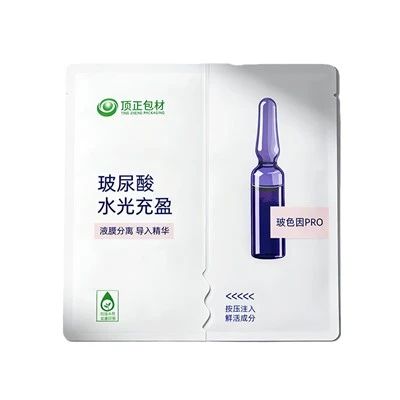
I’ve seen too many brands make the mistake of choosing the cheapest label upfront, only to pay for it in hidden costs: downtime, chargebacks, fines, lost sales. That’s why we don’t just sell shrink sleeves—we do a free, no-obligation total cost of ownership analysis for every client, breaking down exactly where they’re spending money now and how shrink sleeves can help them save more while growing sales. Whether you’re a 10,000-unit startup or a 10 million-unit national brand, there’s a shrink sleeve solution that fits your budget and goals. If you’re tired of hidden label costs, want to boost your shelf visibility, or just want to stop wasting money on outdated packaging, reach out to our team to chat through your specific needs. No sales pitch, no pressure, just real numbers tailored to your brand.
Offset Plant-Based Ink Printing References:
- Sustainable Packaging Coalition. (2023). Shrink Sleeve Recyclability and Compatibility Report.
- Packaging Association of North America (PANA). (2024). High-Speed Packaging Line Efficiency Benchmark Study.
- Journal of Product and Brand Management. (2023). Shelf Impact: Consumer Attention and Purchase Intent Across Packaging Formats.
- NielsenIQ. (2024). Retail Packaging Sales Lift Correlation Study.
- Extended Producer Responsibility (EPR) Alliance. (2023). 2023 U.S. EPR Fine and Compliance Report.
Hangzhou Tingzheng Packaging Co., Ltd.
Hangzhou Tingzheng Packaging Co., Ltd. is one of the most professional shrink sleeve labels manufacturers and suppliers in China, featured by quality products and good service. Please rest assured to buy bulk shrink sleeve labels made in China here from our factory. We also accept customized orders.
Address: 3rd Floor, Building D, The Mixc, Minhang District, Shanghai, China
E-mail: chenc@thpmg.com.cn
WebSite: https://www.tingzhengpackaging.com/
